30.4 million people in Sudan require humanitarian assistance. Here’s what we’re doing — and how you can help.
On April 15, 2023, violent clashes in Sudan’s capital of Khartoum sparked a nationwide conflict. Two and a half years in, Sudan is now the world’s largest humanitarian crisis, with a growing risk it could soon become the worst famine the world has seen in over 40 years.
30.4 m
30.4 million people in need of humanitarian assistance in Sudan in 2025.
people in need of humanitarian assistance in 2025
11.7 m
11.7 million people forcibly displaced by conflict as of November , 2025
people forcibly displaced by conflict as of November 2, 2025
21.2 m
21.2 million people facing acute levels of hunger
people facing acute levels of hunger
22
22 areas of the country experiencing or at high risk for famine
areas experiencing or at high risk for famine through January 2026
How to help Sudan
Help Concern reach more in Sudan — and other conflict zones around the world.
Over the last 20 years, Sudan has experienced protracted conflict and political unrest, including violence in Darfur dating back to 2003.
More recently, months of civilian protests in 2019 led to a change in leadership, a first in over 25 years, prompting hope for millions.
However, the transitional government’s progress slowed, leaving room for uncertainty, violence, and, eventually, a military coup in October 2021. Since then, tensions between the country’s two governing forces escalated over time, erupting into open conflict on April 15, 2023.
Nearly half of the population of Sudan — 21.2 million people — are experiencing high levels of acute food insecurity (IPC Phase 3 and above).
This includes over 375,000 people experiencing confirmed famine according to the IPC. The most recent famine was confirmed in el-Fasher in the western Darfur region and Kadugli in South Kordofan state. The IPC also warns of famine risks across 20 additional areas in Darfur and Kordofan states.
As of November 2025, an estimated 11.7 million people have been displaced, with over 4 million Sudanese crossing borders into neighboring countries. The majority of displaced (both internally and as refugees) are women and children.
Displacement creates a large portion of the humanitarian need in these situations. Millions of Sudanese escaped violence without much more than the clothes on their backs, and arrived in host communities with little cash and limited resources available to them.
In areas affected by conflict, 70% of the healthcare system has stopped functioning. Taken together with poor living conditions, few hygiene resources, and a lack of adequate sanitation services, this has led to significant outbreaks of disease across the country.
Cholera was reported in Red Sea State, along with high levels of malaria throughout the 2024 rainy season (August to October).
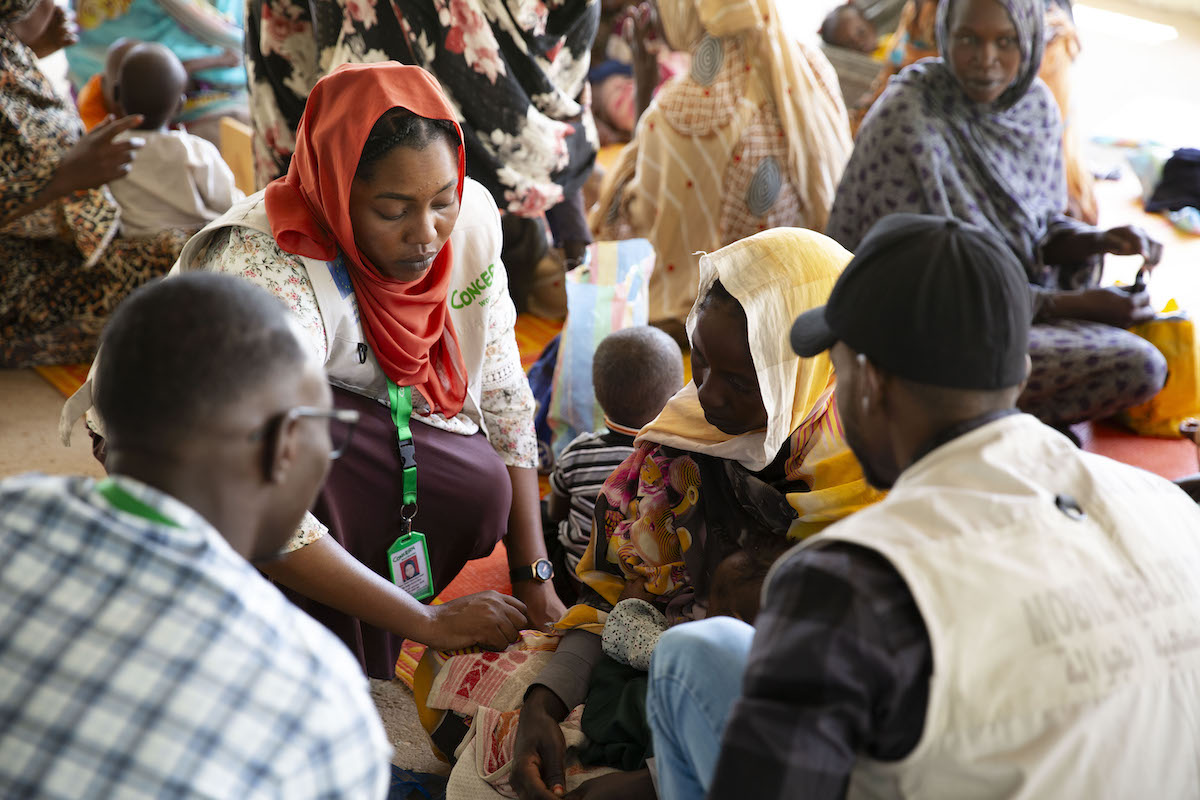
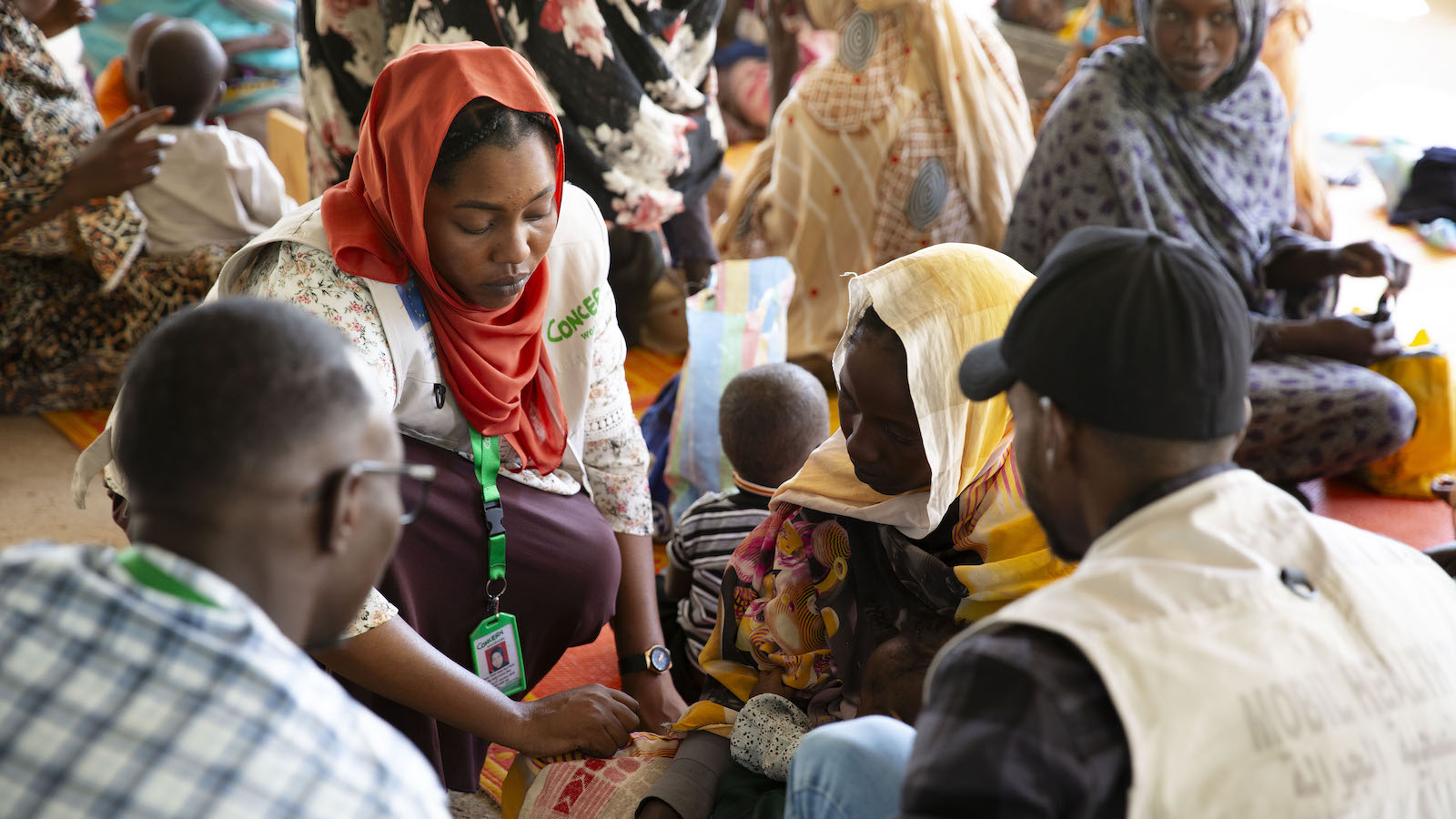
Concern Health and Nutrition Officer, Yamen Nassir, with Zarina* and baby Yaqub* at Ardamata Health Centre in West Darfur, Sudan. (Photo: Kieran McConville/Concern Worldwide)
How is Concern helping in Sudan?
In 2025, Concern marks 40 years of lifesaving work in Sudan. Our response to the current crisis includes focuses on health and nutrition, livelihoods, food security, and water, sanitation, and hygiene (WASH) services. In the last two years, we have been able to respond to an ever-changing situation and ensure that help is going where it’s needed most.
480,000
480,000 people reached so far in 2025
people reached so far in 2025
164,500
164,500 people accessed essential health services
people accessed essential health services
16,500
16,500 children treated for malnutrition
children treated for malnutrition
12,400
12,400 people received emergency food assistance
people received emergency food assistance
How is Concern helping Sudanese refugees?
Concern is also working with Sudanese refugees to deliver essential supplies, shelter, and health and nutrition support. We’ve treated thousands of patients in the last two years in our health and nutrition clinics, and distributed essential supplies like non-food item (NFI) and dignity kits. In Chad, we're also working with host communities to ensure their needs are also met.
40,000
40,000 refugees and vulnerable host community members reached in Chad
refugees and vulnerable host community members reached in Chad
18,700
18,700 refugees reached with hygiene kits and improved sanitation practices
refugees reached with hygiene kits and improved sanitation practices
19,500
19,500 patients treated in refugee camps
patients treated in refugee camps
14,300
14,300 children screened for malnutrition
children screened for malnutrition
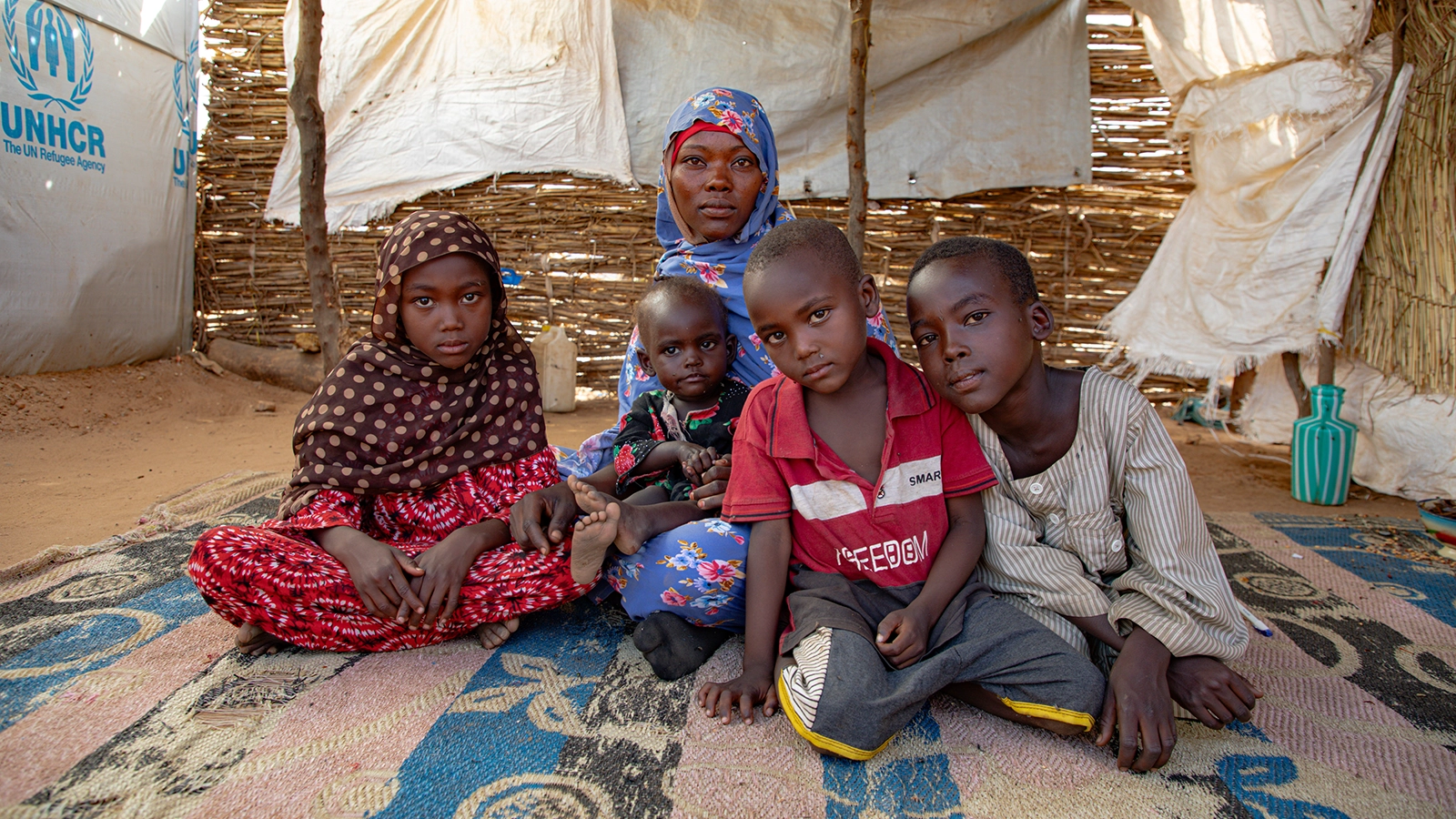
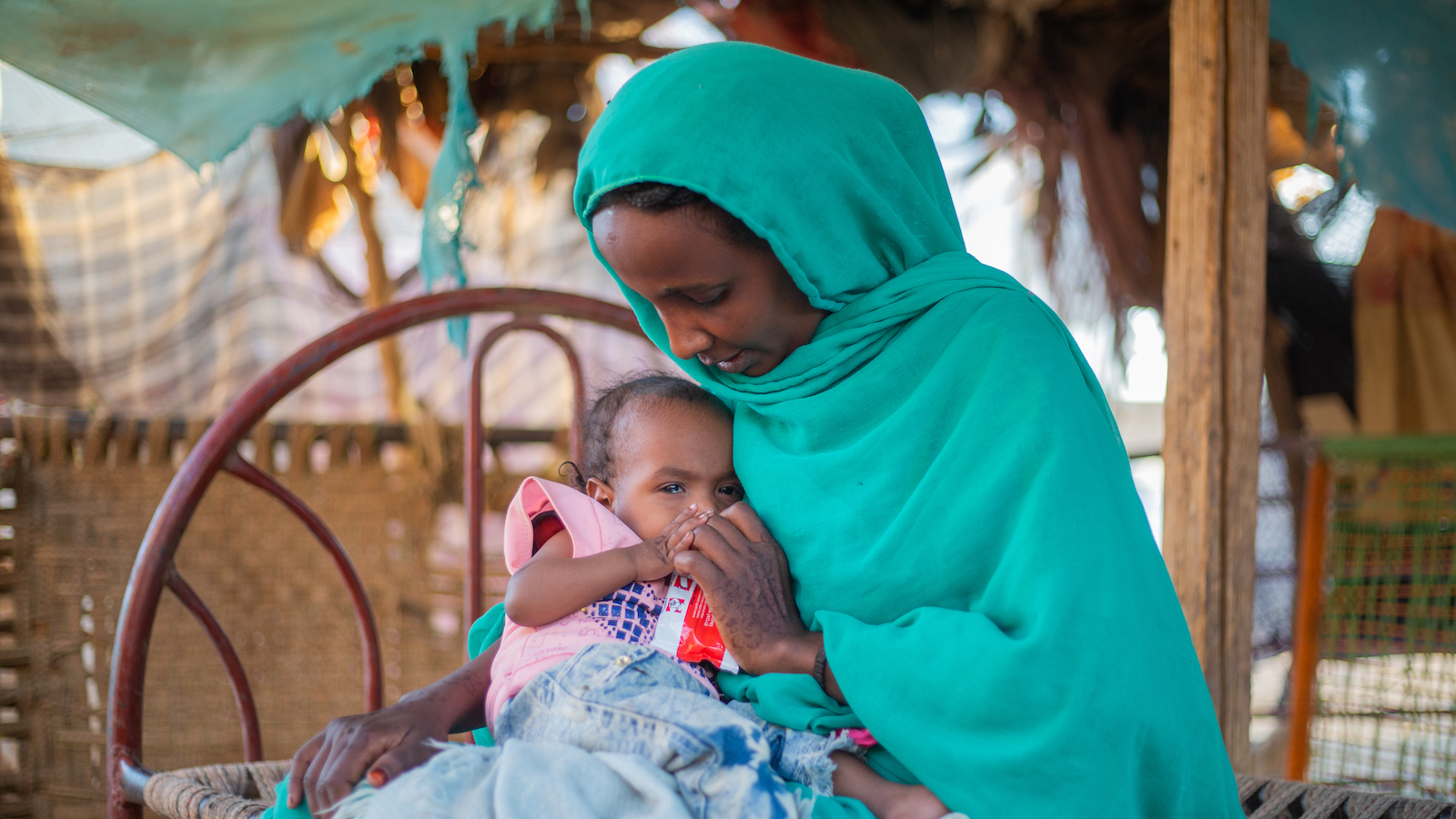
Hamila* (27) lives with her children live in a refugee camp in Eastern Chad supported by Concern Worldwide. Photo: (Eugene Ikua/Concern Worldwide)
You can also learn more about what’s going on in Sudan in the links below, and follow Concern Worldwide US on LinkedIn, Instagram, YouTube, and Facebook for more updates, or sign up for our newsletter below.