


Concern Worldwide supports nearly 400,000 people impacted by the Sudan conflict
As the conflict in Sudan marks three years, Concern Worldwide has supported nearly 400,000 people affected. This includes life-saving essentials such as healthcare, shelter, food, clean water, and child education.
The humanitarian organization is supporting over 144,000 people in Sudan, while in neighboring Chad and South Sudan, it is supporting approximately 255,000 Sudanese refugees.
The humanitarian crisis in Sudan is the largest in the world today; 72% of the population – 34 million people – require humanitarian assistance. The situation remains dire, fueled by an ongoing conflict which shows little hope of resolution.
With support from institutional donors, Concern has scaled up its response across Sudan and neighboring countries, focusing on the most vulnerable and hard-to-reach communities.
Representatives visited Ádre refugee camp on the Chadian side of the Chad - Sudan border. Concern is working in both areas, supporting people coming from Sudan and the host communities into which they arrive. Over 900,000 refugees from Sudan have come to Chad since April 2023, while nearly 390,000 people have returned home to Chad from Sudan, all adding significant pressure on already under-resourced and limited services.
“Irish Aid’s support has been critical in allowing Concern to respond to the challenges facing Sudanese refugees and host communities in Eastern Chad as well as in South Sudan and inside Sudan itself” said Reka Sztopa, Regional Director for Chad.
“The Sudan crisis has slipped out of the headlines despite the staggering needs both inside Sudan and in neighboring countries. It is therefore very much welcome that the Irish government, through their financial support and advocacy, are working to keep the Sudan crisis and its resolution high on the international agenda.”
In Adré, the main entry point for refugees, Concern programs are providing dedicated support to women and children affected by violence, in addition to basic services.
Further inland in Sira, a village with a population of approximately 800 people, representatives met both refugees and families in the host community who explained what life is like for them, the challenges they are facing and the difference that support from Concern has made.
Khatir is originally from Sudan but moved to Sira with her Chadian husband, who she has since divorced from. She is solely responsible for their three young children. The village supported her with a plot of land, and some food during harvest time which along with day laboring in other people’s fields, enabled her to feed her children. As a vulnerable household, she was registered with Concern and received cash assistance along with other supports.
“The cash assistance has allowed me to supplement our food, care for my children, and meet several essential needs. Being part of the savings and credit group (Village Savings and Loan Association) allows me to save and borrow, when necessary,” said Khatir.
“When I receive the next loan, I plan to start a small business to support my farming activities, which are currently facing many difficulties because my field is located on slightly higher ground; when there is less rain, the harvests are often poor.”
Concern supports Sudanese refugees in Chad through a range of interventions, including the construction of family shelters, non-food item kits with things like mosquito nets, bedding, cookware, hygiene kits, and health and nutrition services.
Beyond emergency assistance, Concern is also helping communities build resilience. In Sila Province, 2,400 households in border villages have received support to stabilize their livelihoods following the economic disruption caused by the crisis.
The program also promotes social cohesion, supporting women’s participation in savings groups and facilitating community dialogue and local conflict-resolution mechanisms in areas hosting diverse and vulnerable populations.
Within Sudan over 9.1 million people are internally displaced. A third of these households reported that at least one member went an entire day and night without food in February.
The health infrastructure is crumbling with less than 30% of health facilities functioning and medical supplies in short supply. Water and sanitation are crucial issues with half of the population of Sudan reporting difficulties in accessing safe water.
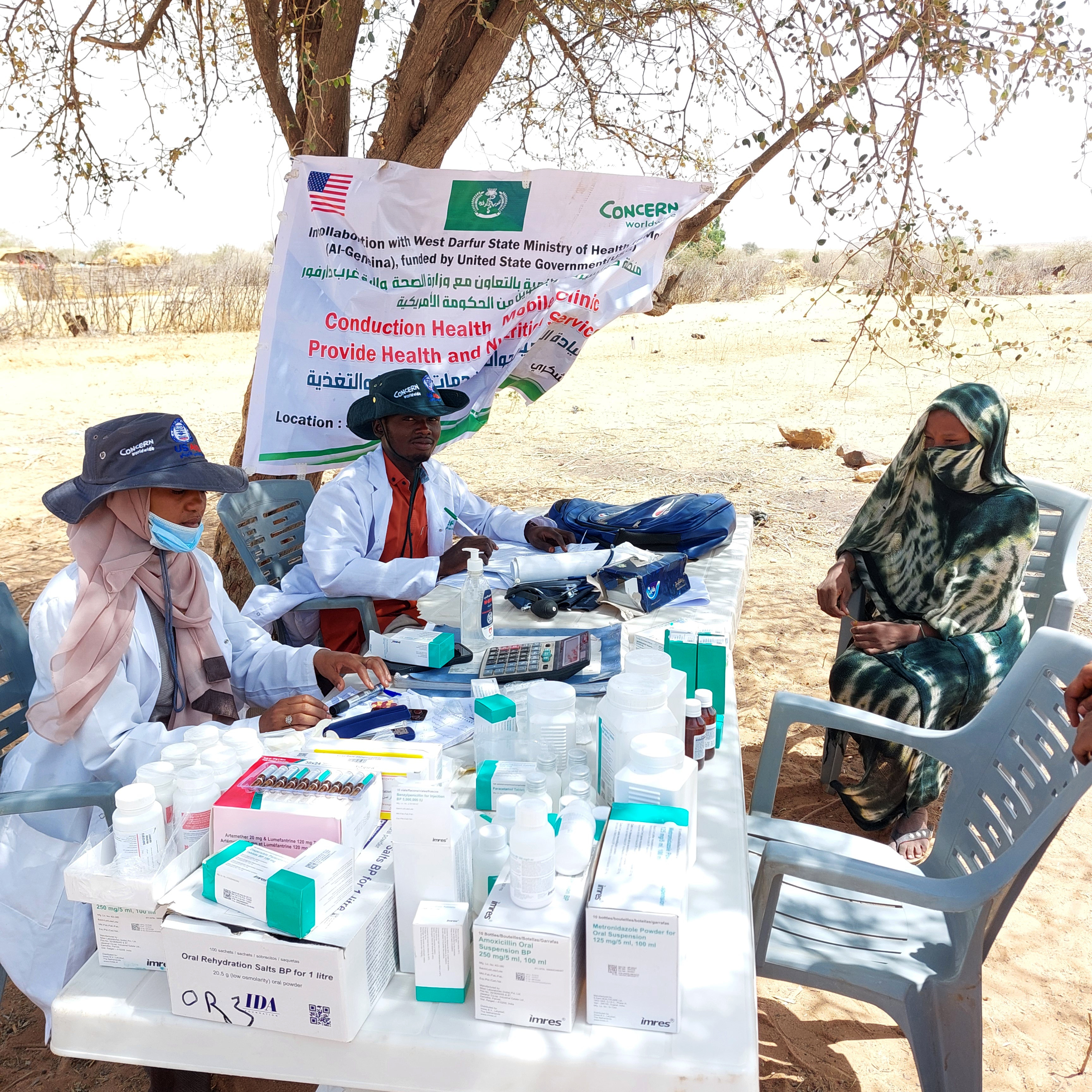
Over 48,000 people are being supported through funding of the rehabilitation of sanitation facilities at Concern health and nutrition clinics in West Darfur in Sudan. This includes fixing toilets, incinerators and waste disposal units, along with hygiene facilities such as handwashing stations, all essential to stop the spread of infectious and possibly fatal diseases and illnesses.
In 2025, to the end of October, Concern supported 479,986 people and 65 health facilities in Sudan as the crisis continues to deepen, through a range of donors including the European Union, the US Department of State and the World Food Programme.
This included providing cash assistance for basic needs such as food, soap and hygiene items, medical expenses and clothes.
Prioritizing hard-to-reach locations and the most at-risk communities, Concern has delivered 56 metric tons of pharmaceuticals and equipment to health facilities this year, operated four mobile health teams in West Darfur, South and West Kordofan, and mobilized three emergency response teams in West and Central Darfur. This is in addition to supporting agricultural training and village savings and loan associations to support livelihoods.
It’s also provided therapeutic supplementary feeding to malnourished children aged five and under in 55 health centers.
Continued international support is critical to ensure humanitarian access, protect civilians and aid workers, and support a fully funded response to the crisis.
🗣️ For media inquires or to speak to a member of our team about this response, please connect with Candance Patel-Taylor at [email protected].
Connect with us
If you would like to speak to a member of our team about any aspect of our work, please get in touch with us using the details below.
- Contact Candance

Candance Patel-Taylor
Vice President of Marketing & Communications
