


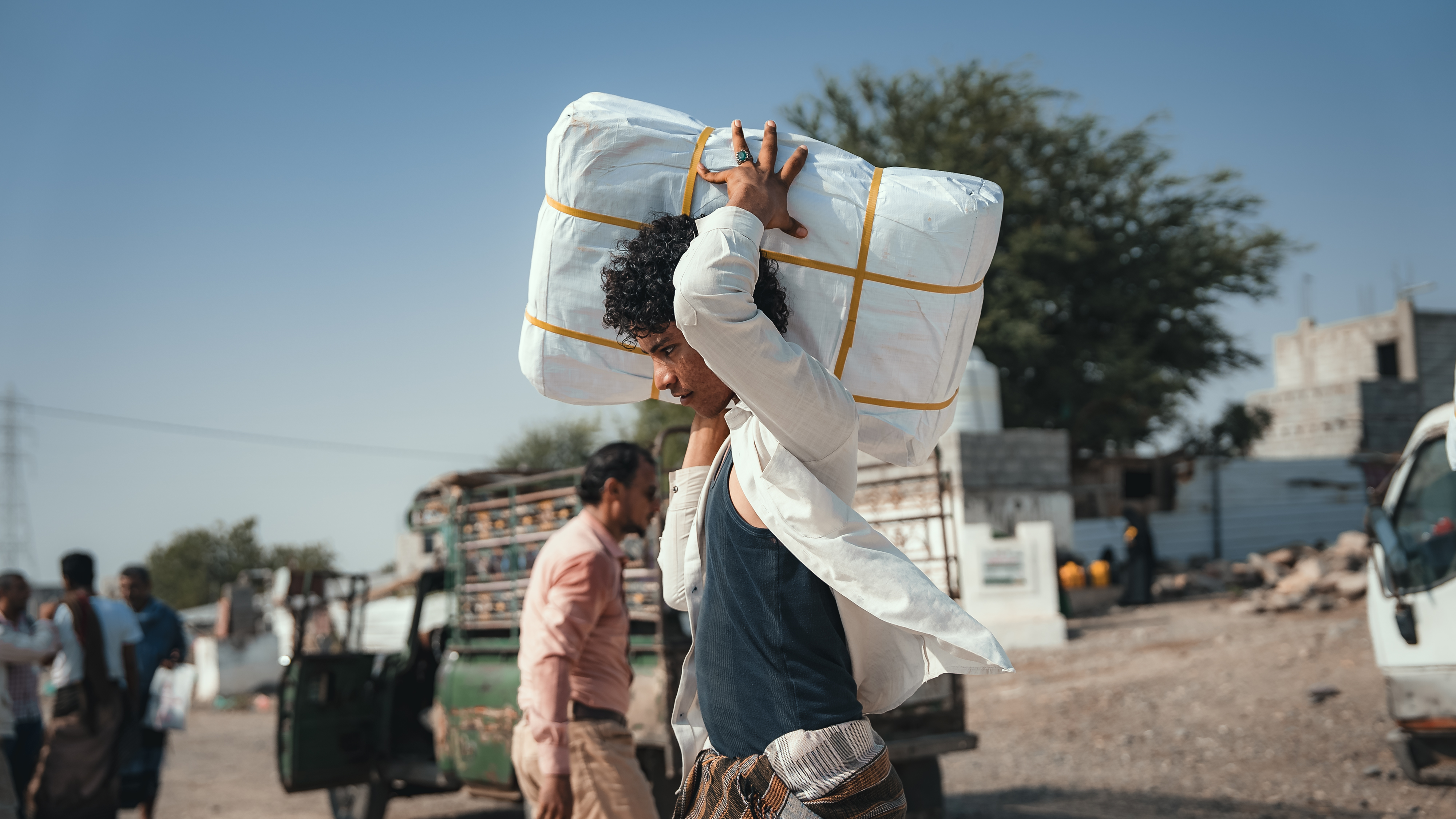
UN humanitarian overview reveals millions of people at risk of being left behind in 2026
The 2026 Global Humanitarian Overview (GHO), released today, reveals how drastic global funding cuts have led to harsher prioritization and boundary-setting, forcing humanitarians to scale back life-saving assistance at a time when humanitarian needs are escalating, leaving millions of crisis-affected people at risk of being left behind.
The 2026 GHO estimates that 239 million people were in need of humanitarian assistance at the end of 2025. It aims to target 135 million people at a cost of $33 billion. Within this, it aims to prioritize 87 million people at a cost of $23 billion. This includes three million people in Gaza and twenty million people in Sudan.
The GHO is an annual report by the United Nations that assesses global humanitarian needs for the coming year and outlines the responses and resources needed to address them.
“Across the world, humanitarian needs are escalating at an alarming rate as conflicts lack political solutions and violations of international humanitarian law are being carried out with a growing sense of impunity,” Concern Worldwide CEO Dominic Crowley said.
“Civilians and humanitarian workers are under direct attack, schools and hospitals are being bombed, and starvation and sexual violence are being used as weapons of war, leaving communities devastated. These crises are being intensified by climate shocks and economic fragility, driving record levels of displacement and fueling a rapidly growing global hunger emergency.”
Despite escalating needs, in June 2025, the UN Emergency Relief Coordinator launched a “hyper-prioritized” strategy in response to the severe funding cuts, whereby only the most acute, life-threatening needs would be addressed. Effectively, this meant that 114.4 million people, just 38.3% of the total number of people in need of humanitarian assistance globally, would be targeted.
This followed two years of “boundary setting,” during which narrower definitions of who qualifies as “in need” were adopted, with limited consideration for the consequences for those who no longer meet the revised thresholds.
Funding for Humanitarian Needs and Response Plans (HNRP) has also been drastically scaled back in the past few years. Even the largest and most high-profile crises remain critically underfunded in 2025: Ukraine has received 48.7% of the funds needed, Gaza 40%, and funding for the Sudan response is at 35.4%, down sharply from 69.3% in 2024.
Meanwhile, other crises are even more neglected. The Democratic Republic of Congo’s (DRC) appeal is 22% funded, while Yemen and Somalia’s appeals are both at 24%. The figures for Yemen and Somalia mean that there is only funding to support one of every four people in need. For DRC, it is closer to one-in-five people.
“As funding plummets, humanitarian organizations are being forced to dramatically scale back assistance and protection for people in crisis” Mr Crowley said. “Vital services – such as emergency food and health care, water, sanitation, and protection programs – are being reduced or suspended, leaving millions of people at greater risk of preventable disease, malnutrition and displacement.”
The consequences of funding cuts and forced prioritization are potentially fatal for millions of people struggling to survive. In Yemen, one of the world’s most severe nutrition emergencies, the Global Nutrition Cluster (GNC) reported in September that funding cuts have forced the closure of 377 outpatient therapeutic program sites and 2,376 supplementary feeding sites, leaving millions of mothers and children without life-saving support. At the same time, the reprioritization of needs forced the GNC to reduce planned targeting from 7.8 million beneficiaries to only two million, and even then, less than 10% of this funding has been secured.
The example of Yemen highlights the devastating consequences of hyper-prioritization: the gap between the number of people who need aid and the number of people targeted continues to grow.
“Millions of people worldwide who depend on aid are being excluded from response planning, while countless others are not being counted at all. The GHO now lists fewer people as ‘in need’ than a few years ago, yet humanitarian needs have worsened dramatically,” Mr Crowley said.
“Hyper prioritization is ultimately an admission of failure to support millions of people who may not be at the extreme end of vulnerability today – but if they are not supported now, they will be more vulnerable tomorrow, next week or next month.”
“Hyper-prioritization is a symptom of underfunding, not a solution to it. At the close of 2025, the Global Humanitarian Overview is only 27.8% funded. The 2026 GHO cannot follow the same path. Without a fully funded 2026 GHO, and additional quality funding, humanitarian partners will be unable to reach even people with the most life-threatening needs.”
🗣️ For media inquires or to speak to a member of our team about this response, please connect with Candance Patel-Taylor at [email protected].
Contact:
🗣️ For media inquires or to speak to a member of our team about this response, please connect with Candance Patel-Taylor at [[email protected]](mailto:[email protected]).
- Contact

Candance Patel-Taylor
