What is Ebola? A guide to the virus (and how we’re fighting it)
May 19, 2026
From symptoms and treatment to outbreak response and community education, here’s what to know about Ebola virus disease and the fight to contain it.
Over the last decade, we’ve seen the two largest Ebola outbreaks take place in West Africa (2014-16) and the Democratic Republic of the Congo (2018-20). With a new outbreak confirmed, global anxiety about the disease has been renewed while communities in the DRC and Uganda are being hit hard with rising caseloads, fatalities, and additional pressure on an already-fragile health system.
In the last few years, however, advances in treatment, vaccinations, and outbreak response have improved the ability to contain the disease and save lives. Here’s what you need to know about the Ebola virus, including how it spreads, how it’s treated, and how organizations like Concern respond to outbreaks.
What is Ebola?
Ebola, also known as Ebola virus disease (EVD), is a rare but serious disease that can cause severe illness and death in humans.
Several related viruses can cause Ebola virus disease. These viruses belong to a genus known as Orthoebolavirus, similar to how different influenza viruses belong to the same broader family. Three types of Orthoebolavirus are known to cause major outbreaks in humans: Ebola virus, Sudan virus, and Bundibugyo virus.
The disease was first identified in 1976 during two simultaneous outbreaks in what are now South Sudan and the Democratic Republic of the Congo. The DRC outbreak happened near the country’s Ebola River, which is how the virus got its name.
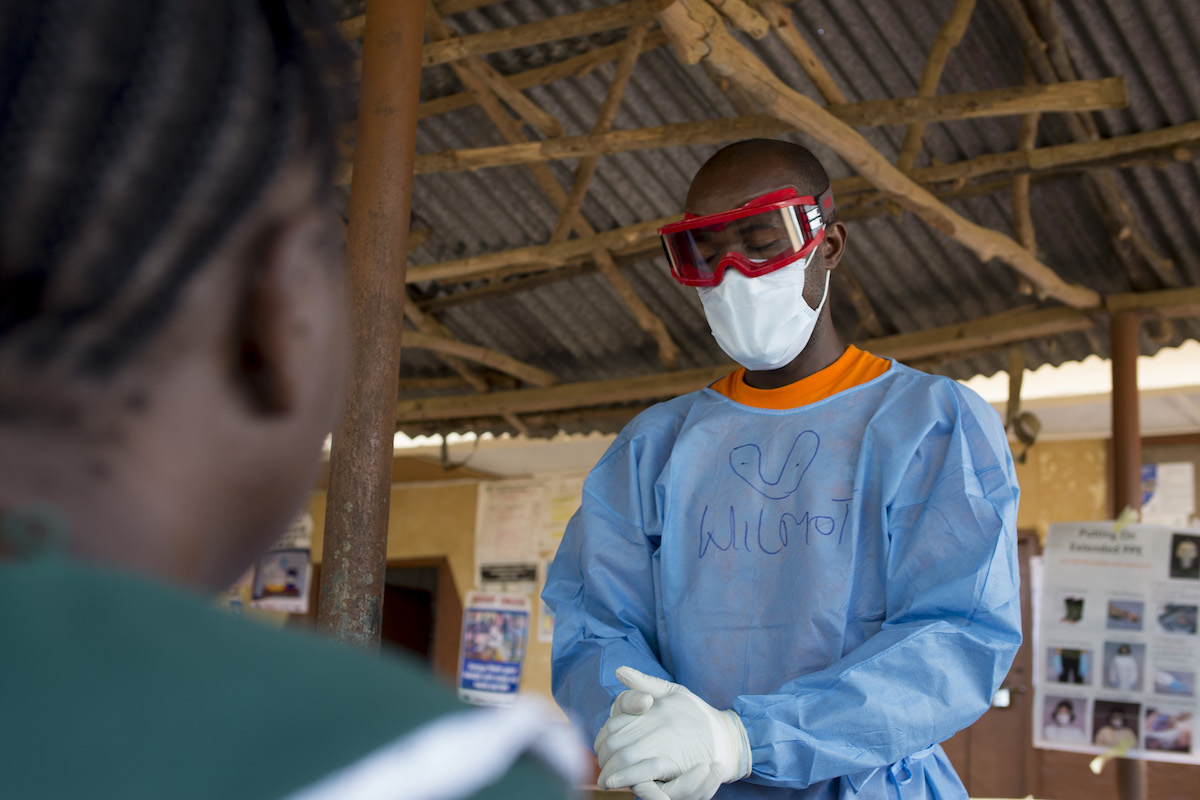
Infection prevention and control (lPC) training for staff at Lumpa Health Center, Sierra Leone. Concern led these trainings across more than 200 health clinics in the area as part of a larger Ebola response during the 2014-16 epidemic. (Photo: Kieran McConville/Concern Worldwide)
How does Ebola spread?
Ebola is highly infectious, but it isn’t airborne.
Experts suggest that fruit bats are natural hosts of the virus and that it can be passed to other animals in their ecosystem. It can then be transmitted to humans who have close contact with infected animals, including eating them.
The disease passes from person to person through direct contact with bodily fluids from a person who is sick or has died from the disease—or by contact with surfaces that have been contaminated with bodily fluids. Caring for people sick with Ebola and burials for its victims are two of the main ways the virus spreads.
Per the World Health Organization, people cannot transmit the disease before they have symptoms. They remain infectious as long as the virus remains in their bloodstream.
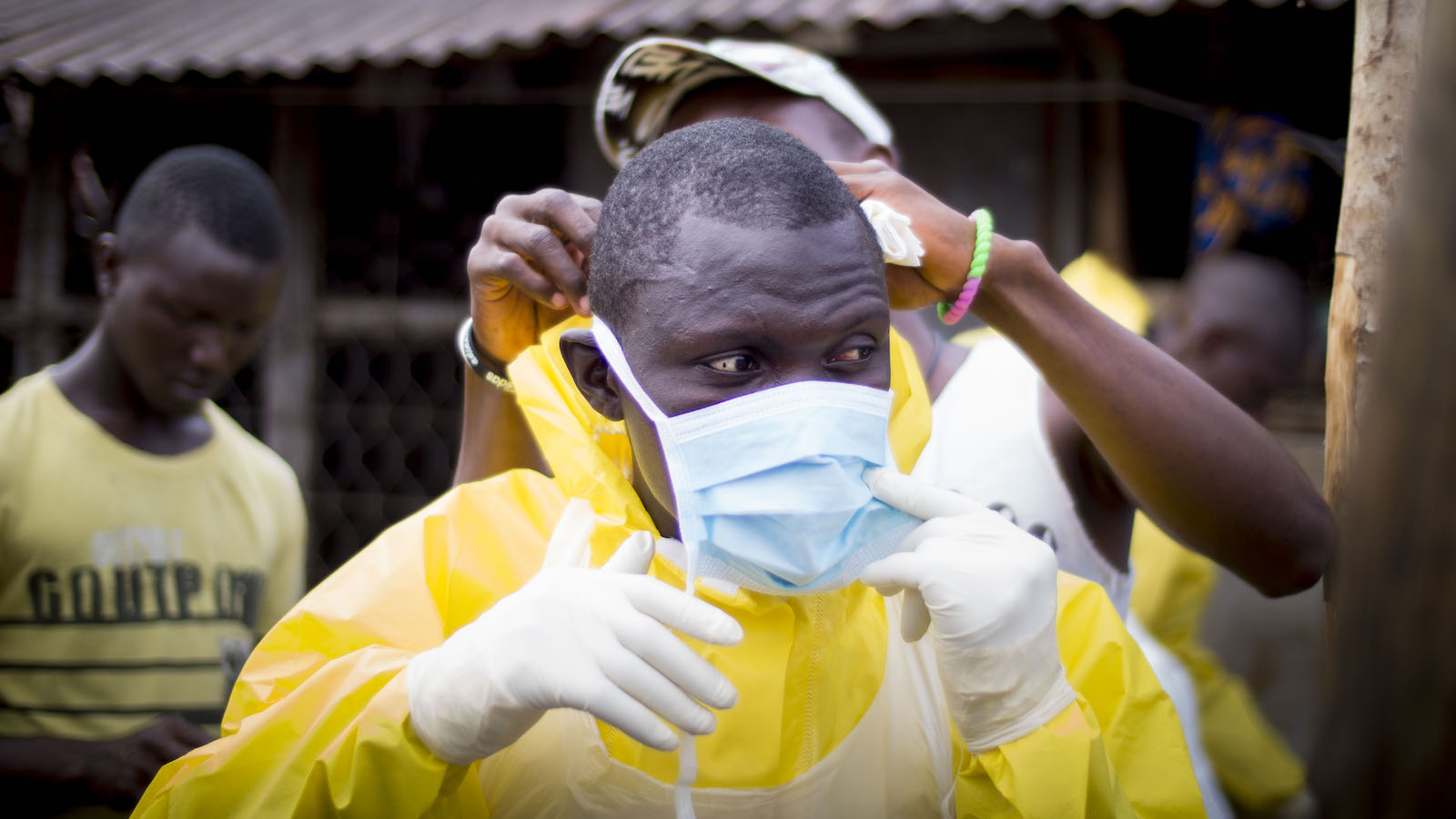
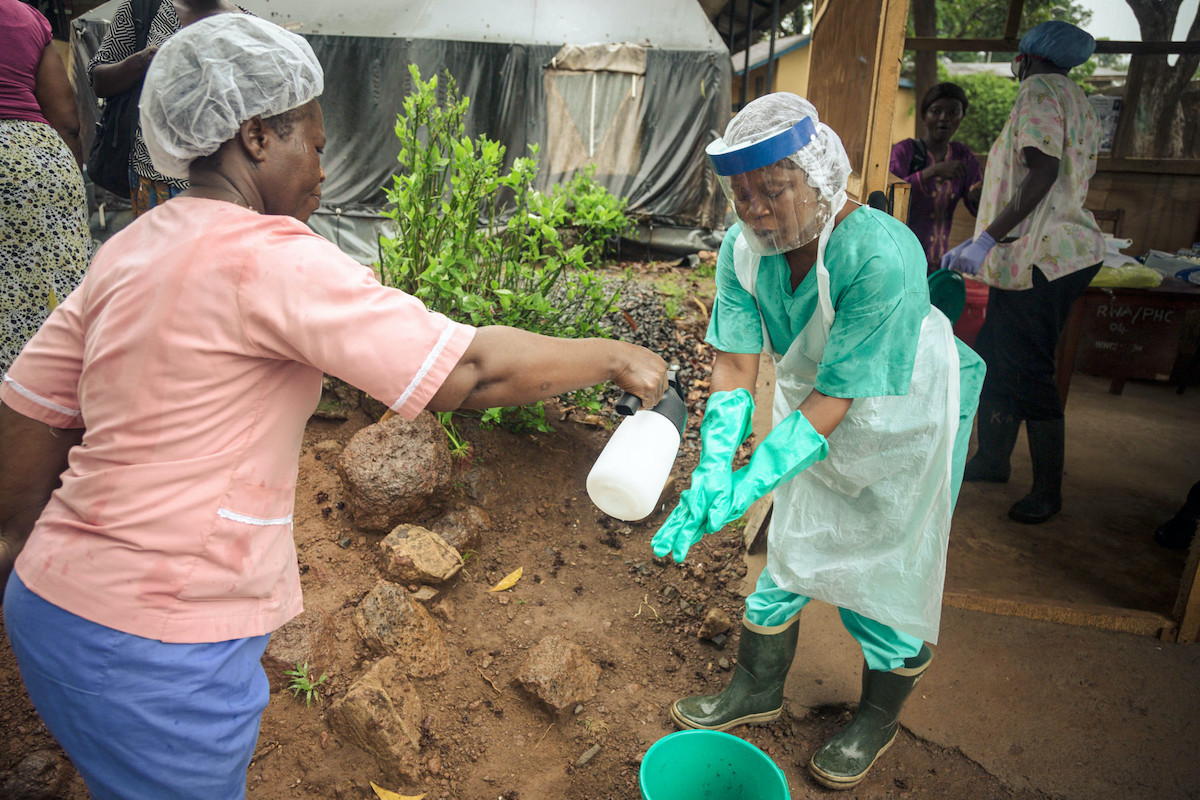
Nurse Mariama Kpakiwa in personal protective equipment is disinfected at a clinic in Waterloo, Sierra Leone during the 2014-16 Ebola outbreak. (Photo: Michael Duff/Concern Worldwide)
What are the symptoms of Ebola?
Early Ebola symptoms are often similar to those of the flu and may include:
Fever
Fatigue
Muscle pain
Headache
Sore throat
As the disease progresses, symptoms can become more severe and may include vomiting, diarrhea, abdominal pain, rash, and symptoms of impaired kidney and liver function. Severe infections can lead to other life-threatening complications.
How is Ebola treated?
Ebola virus disease can be deadly, but survival rates have improved significantly in recent years thanks to earlier diagnosis, better supportive care, and new treatments. Patients are treated in isolation centers with what the WHO calls optimized supportive care: replenishing fluids and electrolytes, controlling symptoms, monitoring vitals, and managing possible co-infections like malaria.
In 2022, the WHO also made strong recommendations for two monoclonal antibody treatments for Ebola: mAb114 (Ansuvimab; Ebanga) and REGN-EB3 (Inmazeb). These lab-made proteins act like human antibodies and help the immune system fight disease.
During the previous Ebola outbreak in the DRC (2018-20), a new vaccine was also piloted. The rVSV-ZEBOV vaccine (sold under the brand name Ervebo) had a 97.5% efficacy rate through a system known as “ring vaccination”—in which close contacts of infected patients are vaccinated to help stop the spread. Another two-dose regimen of the vaccines sold as Zabdeno and Mvaeba has also been recommended by the WHO.
These vaccines, however, only prevent the spread of Ebola virus disease, and not Sudan or Bundibugyo viruses, though several candidates are in different stages of development.
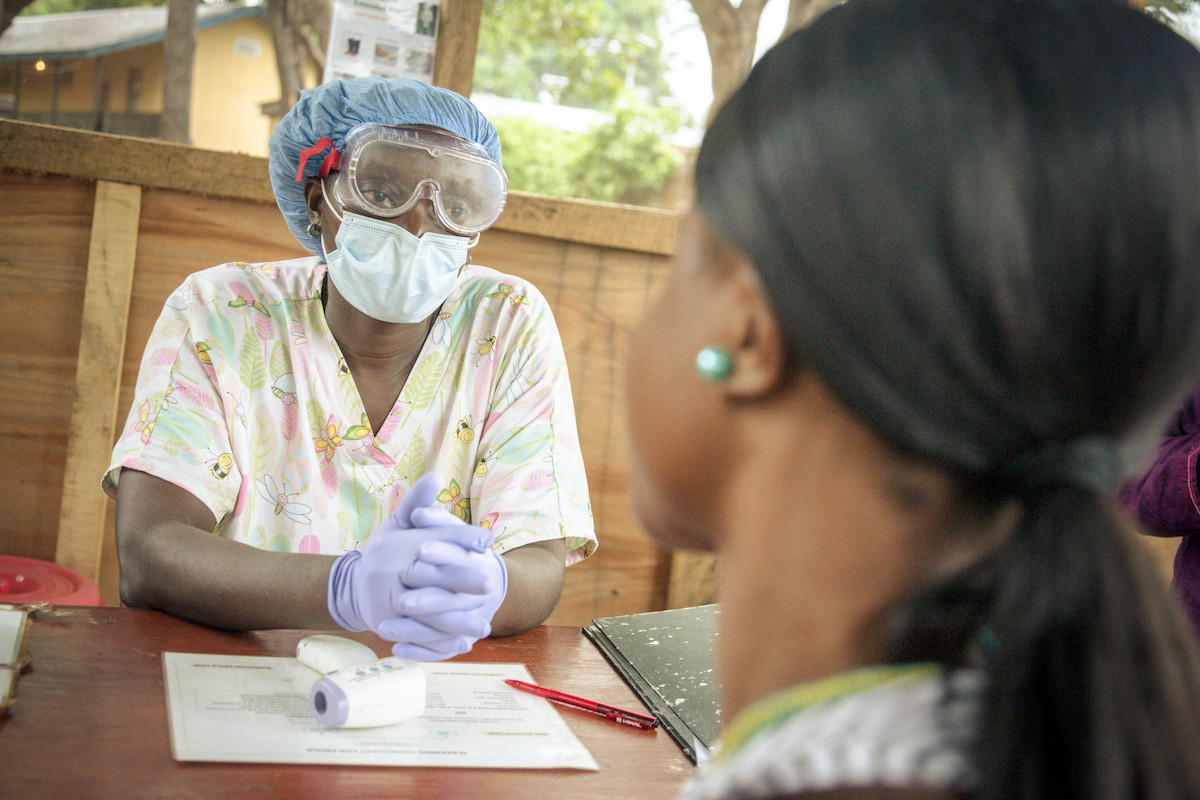
Nurse Emma Senesie checks all patients and visitors for signs of Ebola before they enter a clinic in Waterloo during the 2014-16 Ebola outbreak in Sierra Leone. (Photo: Michael Duff / Concern Worldwide)
Recent Ebola outbreaks
The two largest Ebola outbreaks on record happened in the last decade.
The West African Ebola epidemic (2014-16)
The 2014-16 West African Ebola outbreak remains the largest in history, originating in Guinea and soon spreading to Liberia, Sierra Leone, Nigeria, and Senegal and being declared a global health emergency.
In early May, 2016, the WHO estimated a total of over 28,600 cases and 11,300 deaths. The outbreak officially ended on June 9 of that year.
Related
News
The West African Ebola virus epidemic: Its history and our response
The most lethal Ebola outbreak in history was felt across Sierra Leone and Liberia — two countries where Concern has had a longstanding history. We shifted focus to respond to the epidemic, block the spread of the virus, and then help battered health and education systems recover.
The West African Ebola virus epidemic: Its history and our response
The most lethal Ebola outbreak in history was felt across Sierra Leone and Liberia — two countries where Concern has had a longstanding history. We shifted focus to respond to the epidemic, block the spread of the virus, and then help battered health and education systems recover.
Concern had been working in the two countries hardest hit by the outbreak (Sierra Leone and Liberia) for decades prior to the epidemic. We were one of the first NGOs to respond to the crisis, immediately diverting existing resources to help fight the spread of the disease. Our safe and dignified burials program in Sierra Leone was honored at the 2015 EU Health Awards.
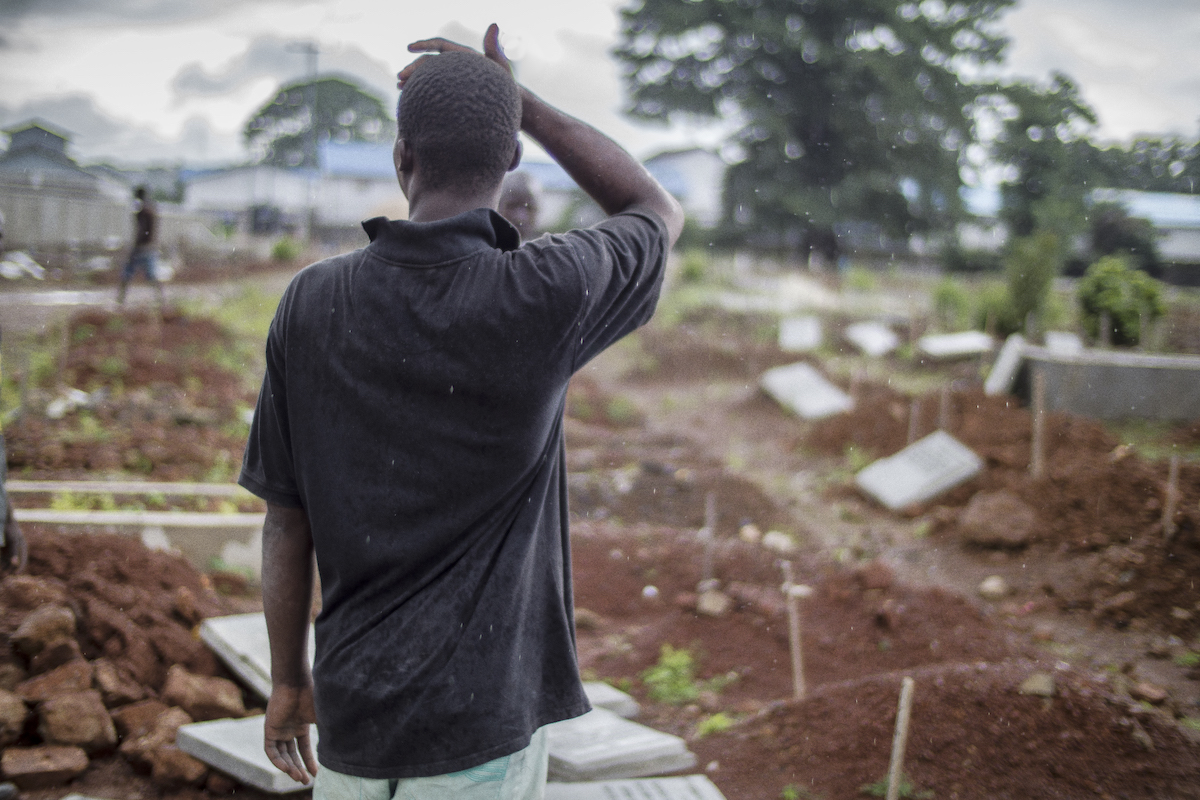
Kingtom Cemetery in Freetown was used for burials during the height of the Ebola crisis, with up to 80 burials a day. Concern Worldwide managed the cemetery at this time and worked to erect permanent grave markers on many of the plots. Photo: Kieran McConville/Concern Worldwide
The Kivu Ebola epidemic (2018-20)
Beginning in August 2018, an outbreak in the eastern DRC region of Kivu spread to other parts of Central Africa through June 2020, leading to over 3,400 reported cases. Conflict in the DRC, including Kivu, furthered the spread of the disease, and hindered access for emergency response. By November of 2018, it had become the second-largest outbreak, though fortunately a spread to Uganda in 2019 was contained.
In the DRC, Concern reached 400,000 people as part of a massive awareness campaign in the province of North Kivu, close to the outbreak’s epicenter in Goma. This helped to curb the spread, as did our efforts to support 23 health centers with prevention and control kits and training for 1,150 health workers in the area, based on our experience in Sierra Leone and Liberia.
How Concern responds to an Ebola outbreak
Ebola outbreaks can have devastating effects on communities, health systems, and local economies. Responding effectively means supporting not only patients, but also the frontline workers, families, and communities working to stop the spread of disease.
Stopping Ebola outbreaks depends on trust, accurate information, and strong community engagement. Fear and misinformation can spread quickly during an outbreak, making it harder for families to protect themselves and seek care when they need it. That makes community outreach one of the most important aspects of an effective outbreak response—for any outbreak.
Concern’s teams work with communities, local leaders, journalists, and volunteers to share accurate information about how Ebola spreads, how to recognize its symptoms, and how to prevent risk of infection. Some of our closest partners are local healthcare workers, clinic staff, community health volunteers, and traditional birth attendants and healers. We train these networks on symptoms and prevention, as well as how they can help spread awareness within their communities.
We also support this outreach by organizing sessions, distributing posters and factsheets, airing radio messages, and helping to facilitate behavioral change that can help stop the spread—such as eating bush meat or safe burial practices.
During an outbreak, health centers, clinics, and frontline workers often need additional supplies, equipment, staff, and logistical support to respond safely and effectively. We respond by providing personal protective equipment, handwashing and disinfection supplies, transportation, ambulance maintenance and repair, and logistical and psychosocial support for community health volunteers. We also help health clinics to refine and build upon infection prevention and control measures—especially if caseloads spike.
Responding to a major outbreak requires coordination between local communities, health workers, humanitarian organizations, and national health authorities. During large-scale epidemics, health systems can quickly become overwhelmed, especially in areas already facing limited resources or ongoing humanitarian crises.
Our teams support national and local response efforts by providing technical, logistical, and operational assistance where it’s needed most. Concern staff have helped national ministries with contact tracing, provided technical and logistical assistance at every level of government response (from local to national), and assisted with last-mile distribution of supplies and vaccines.
Traditional burial practices and funerals can quickly turn into superspreader events for communities. During the 2014-16 Ebola outbreak in Sierra Leone, we piloted a new way of providing safe and dignified burials for Ebola victims that prevented the spread of disease while also allowing friends and families to grieve in line with their traditions and customs. Learn more about our safe and dignified burials program in Sierra Leone.
The impact of Ebola extends far beyond the virus itself. Outbreaks can place enormous strain on already fragile health systems and disrupt livelihoods, education, food security, and routine medical care. Many diseases common in outbreak-affected areas, including malaria and typhoid, share symptoms with Ebola, which can make people afraid to seek treatment at health facilities. Pregnant women and other vulnerable groups may also avoid clinics because they fear infection.
This is when our core programs are needed most, and we strive to keep them running where we can.
We are currently responding to the 2026 outbreak of Ebola in the Democratic Republic of the Congo. 100% of your donation to our Emergency Fund goes directly to our frontline emergency response.