The Rohingya crisis, explained
Aug 24, 2026
With humanitarian aid shrinking and no clear path home, the Rohingya crisis enters its tenth year. Here’s what you need to know in 2026.
On August 25, 2017, violence in Myanmar’s Rakhine State forced over 750,000 people to flee their homes. Eight years later, more than 1.3 million Rohingya refugees and asylum-seekers remain in displacement. The vast majority have spent most (if not all) of that time crowded on a narrow strip of hilly land in Cox’s Bazar, Bangladesh.
While it remains one of the world’s largest refugee crises, the Rohingya crisis has largely faded from global headlines. Meanwhile, over 1 million people face shrinking humanitarian aid, intensifying natural disasters, and a deeply uncertain future as the crisis enters its tenth year. Here’s what you need to know in 2026.
1. A crisis decades in the making for “one of the world’s most persecuted minorities”
The mass displacement of August 2017 was not an isolated incident for the Rohingya, who have suffered decades of marginalization and violence. However, this current crisis has created the largest displacement in Asia since the Vietnam War.
The crisis that has dominated the last nine years is the largest in modern Rohingya history. However, it didn’t happen in isolation. For generations, this predominantly Muslim ethnic minority lived in Myanmar’s Rakhine State, but went unrecognized by the government and denied citizenship. This made the Rohingya the world’s largest stateless population.
This legal exclusion left families trapped in chronic poverty and vulnerable to recurring waves of targeted violence, including major attacks in 1978, 1991, and 2016. As a result, the UN has called the Rohingya “one of the world’s most persecuted minorities.”
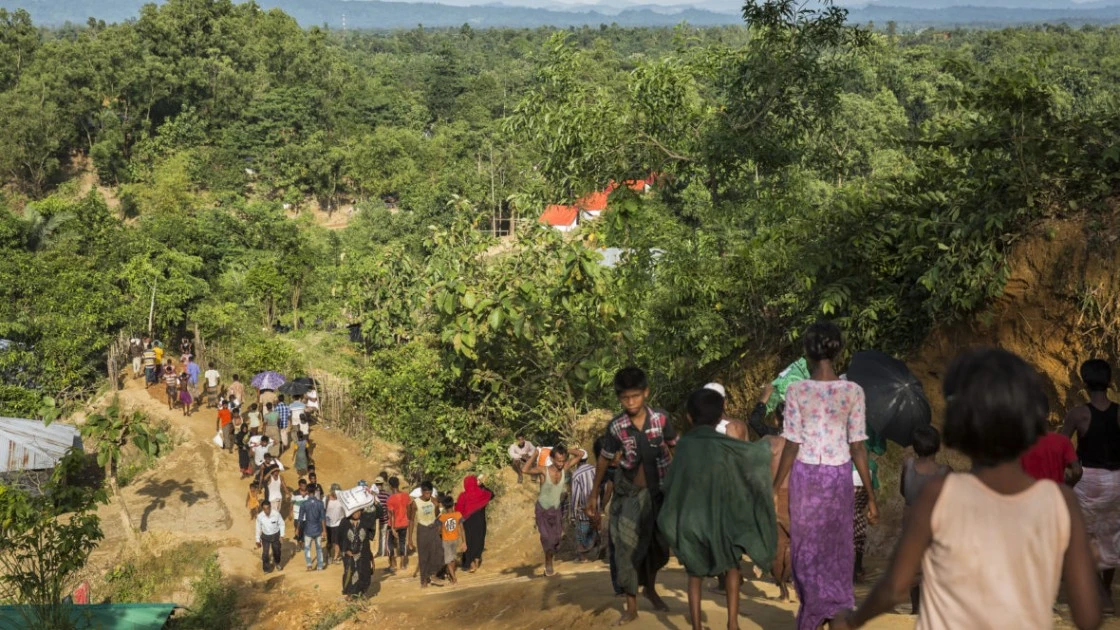
The situation reached a breaking point on August 25, 2017, when violent clashes led to a widespread military crackdown in Rakhine. Those initial attacks were estimated by the UN to have killed 10,000 and forced over 750,000 people to flee, the majority traveling by sea or foot into neighboring Bangladesh. This reduced the Rohingya population in Myanmar by over 50% and created the largest mass-displacement in Asia since the Vietnam War.
2. Inside Cox’s Bazar: What life is like for more than 1 million people in the world’s largest refugee camp
Built rapidly to accommodate a massive influx of people, the 33 camps of Cox’s Bazar, Bangladesh are dangerously overcrowded. For the last nine years, refugees have lived in bamboo shelters that leave them highly vulnerable to fires and monsoon floods.
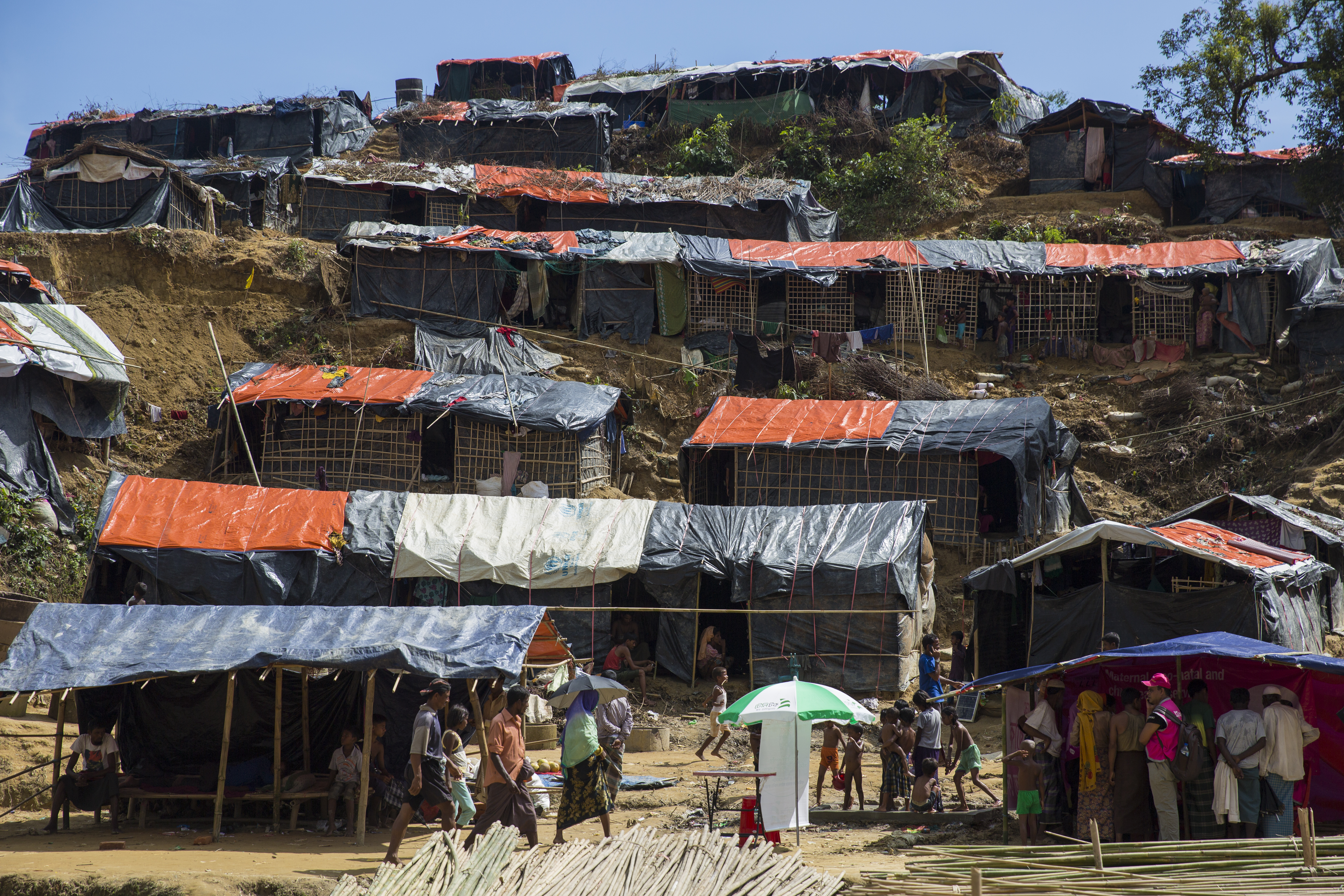
Before August 2017, Bangladesh was host to approximately 300,000 Rohingya refugees. Today, it hosts nearly 1.2 million. To accommodate the sudden influx of arrivals (over half a million in just the first month of the crisis), 33 camps were constructed across the uneven, sandy hills of Cox’s Bazar, forming the world’s largest refugee settlement.
Life in any refugee camp is uncertain, but in Cox’s Bazar it’s especially fragile. Permanent structures aren’t permitted here, leaving roughly 97% of residents in temporary shelters built from bamboo and plastic tarpaulin. Today, over 50% of these shelters require urgent repairs, yet dwindling funding leaves families with few resources to rebuild.
The precarious camp infrastructure is tested during Bangladesh’s annual monsoon season (May through October), and the impact has become more devastating each year. Last month, between July 5 and 19 alone, the camps in Cox’s Bazar recorded over 630 climate-related emergencies, including severe landslides and flash floods linked to El Niño. Over these two weeks, more than 56,000 people were affected and over 13,000 were displaced. These seasonal hazards are compounded by fires, with major blazes in 2021, 2023, and 2024 collectively displacing tens of thousands of people and destroying vital aid centers.
Meanwhile, the camp population continues to expand. Renewed violence in Rakhine State has driven new waves of arrivals across the border. At least 154,000 new arrivals have arrived in Bangladesh over the last two years, exacerbating the dangerous overcrowding in Cox’s Bazar and pushing local resources past their limits.
Between July 5 and 19, 2026, Cox's Bazar recorded over 630 climate-related emergencies, including severe landslides and flash floods that displaced over 13,000 people.
3. 95% of Rohingya families depend on humanitarian assistance, even as global funding shrinks
With global funding in steep decline, the 2026 humanitarian response for the Rohingya has been forced to focus on bare-minimum survival. Even with this hyperprioritized budget, however, the lifelines that 95% of Rohingya rely on are under severe threat.
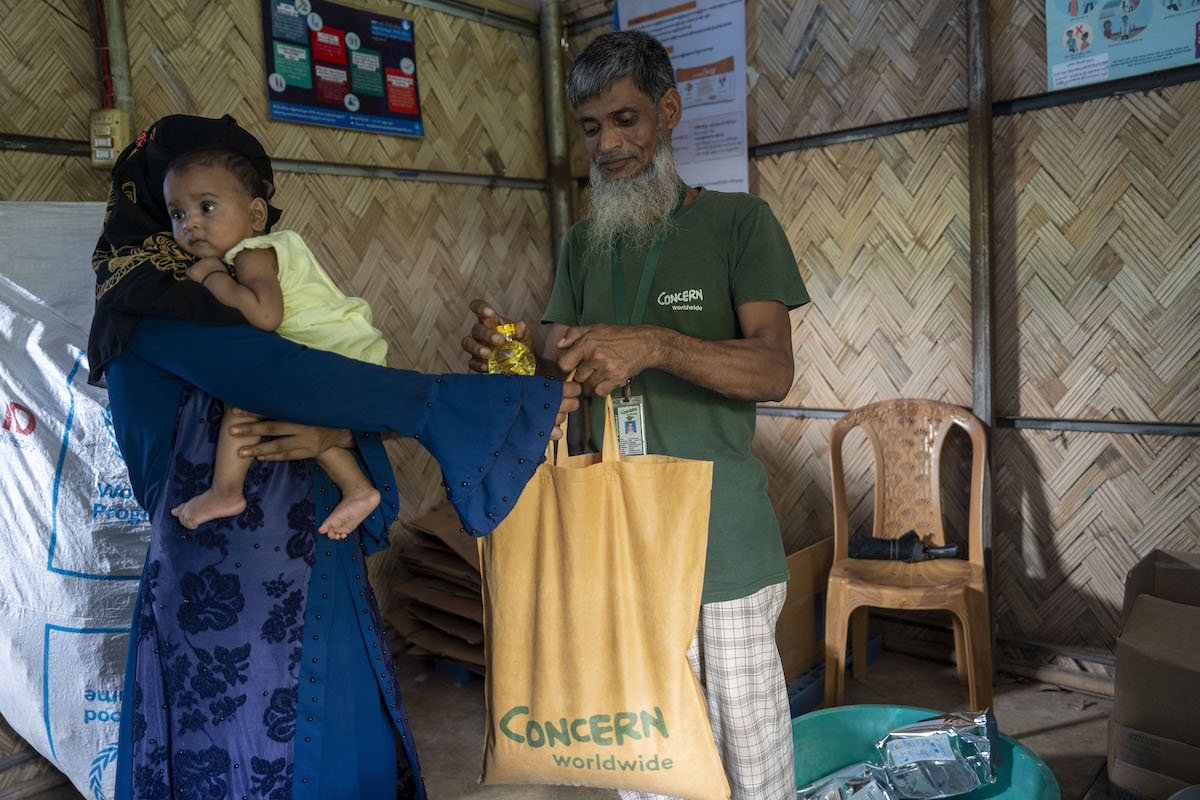
When crises become protracted, the need for humanitarian aid increases over time. Yet, as emergencies continue, crisis fatigue inevitably sets in. After the initial headlines and donations in 2017, the Rohingya have largely slipped from international news coverage and global funding has stagnated. Meanwhile, 95% of them rely on humanitarian assistance for most aspects of their day-to-day lives.
Faced with persistent shortfalls, the UN and its partners recently launched a funding appeal for $710.5 million to meet the most urgent needs of Rohingya refugees and host communities in 2026. Despite increasing needs, this request is 26% lower than last year’s. This is part of a move towards “hyperprioritization” in the humanitarian sector in 2026, focusing emergency responses on bare-minimum survival as the result of sweeping cuts.
Even with this pared-down budget, the UN has warned that even the most critical needs will be unmet in Cox’s Bazar if this $710.5 million cannot be met. In 2026, primary healthcare services and emergency food support are under threat at a time where 35% of Rohingya are estimated to be experiencing crisis levels of hunger (IPC Phase 3) or higher — up from 30% at the same time last year.
Despite increasing needs, the UN's budget for this year's Rohingya appeal is 26% lower than it was last year.
4. The generational toll: What nearly a decade of displacement means for Rohingya children
Over half of the Rohingya in Bangladesh are children. Deprived of formal schooling and exposed to rising hunger and threats to their safety, they risk becoming a lost generation.
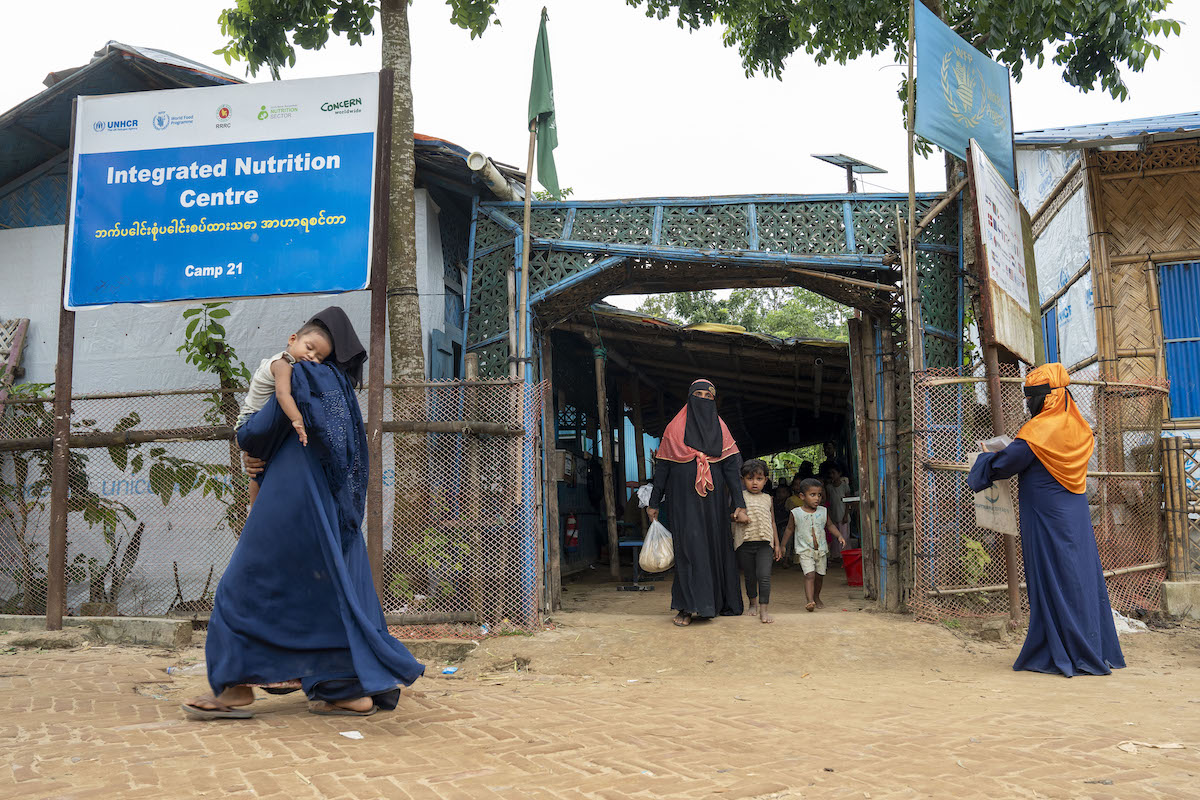
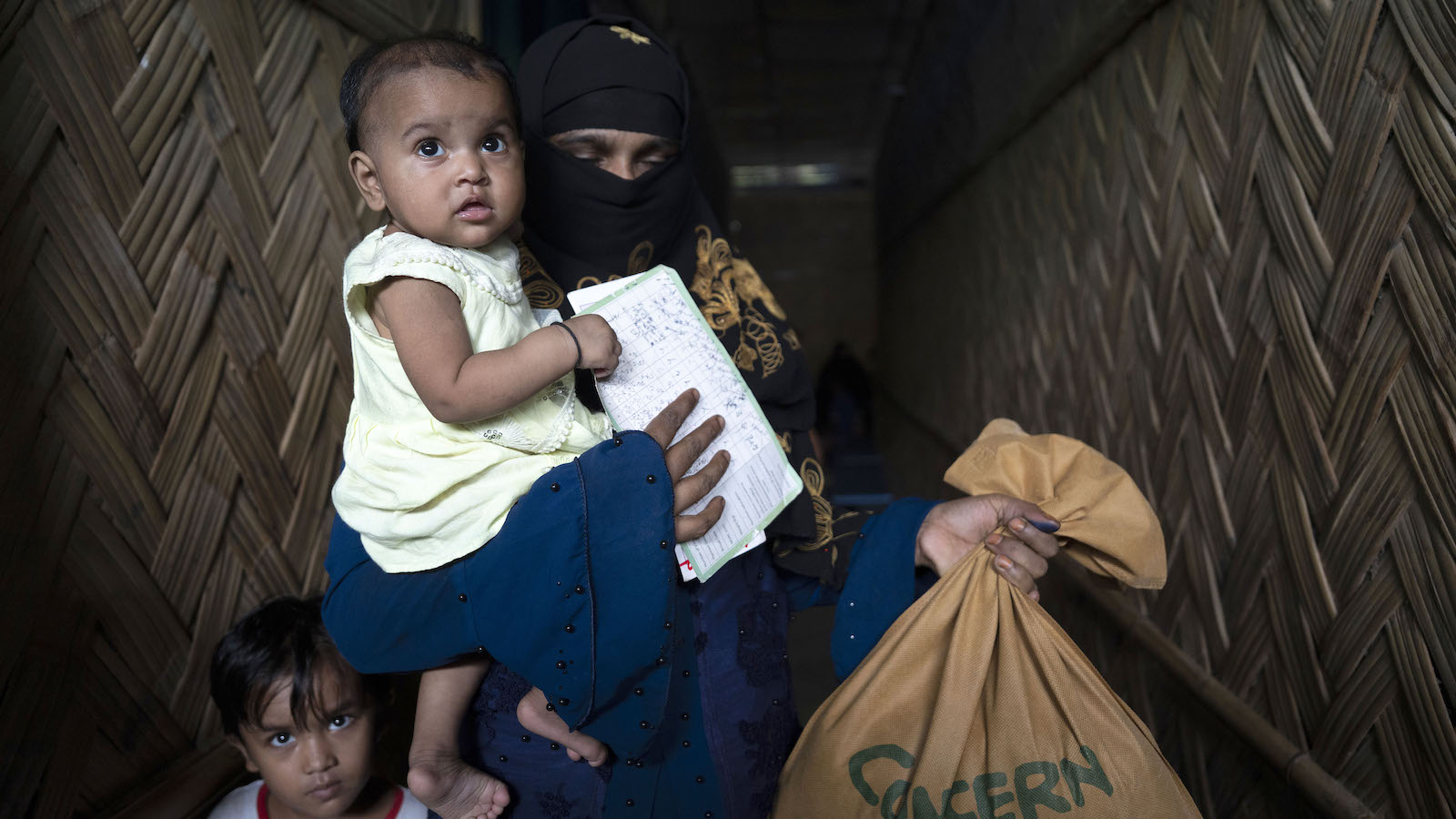
As this crisis enters its tenth year, an entire generation is coming of age in temporary shelters. Children make up 52% of the Rohingya population in Cox’s Bazar, and roughly just as many — 624,000 according to the UNHCR — require humanitarian assistance. Many are too young to remember life before arriving in Bangladesh, or were born in the camps.
The physical threats to these children are compounding. In 2025, malnutrition rates rose by 27% compared to the previous year. At the same time, camp conditions leave them exposed to both human and natural threats: Since January of 2026, UNICEF also reports that over 1,600 children have faced grave violations against their rights, while fires, windstorms, landslides, and floods have killed at least 24.
Beyond these immediate risks, Rohingya children also bear the psychological and developmental burden of displacement. Last year’s funding cuts shuttered over 6,400 learning centers. “Without access to formal education, adequate skills building, and self-reliance opportunities” the UNHCR wrote at the time, “their futures remain on hold.”
Of the 1.2 million Rohingya living in Cox's Bazar, 52% are children — and virtually all are in need of humanitarian assistance.
5. What comes next in Bangladesh — and why emergency relief is no longer enough
As the Rohingya crisis enters its tenth year, frontline aid is no longer a sufficient emergency response. We need to safeguard a sustainable future for both Rohingya refugees and Bangladeshi host communities and push for political action after nearly a decade of displacement.
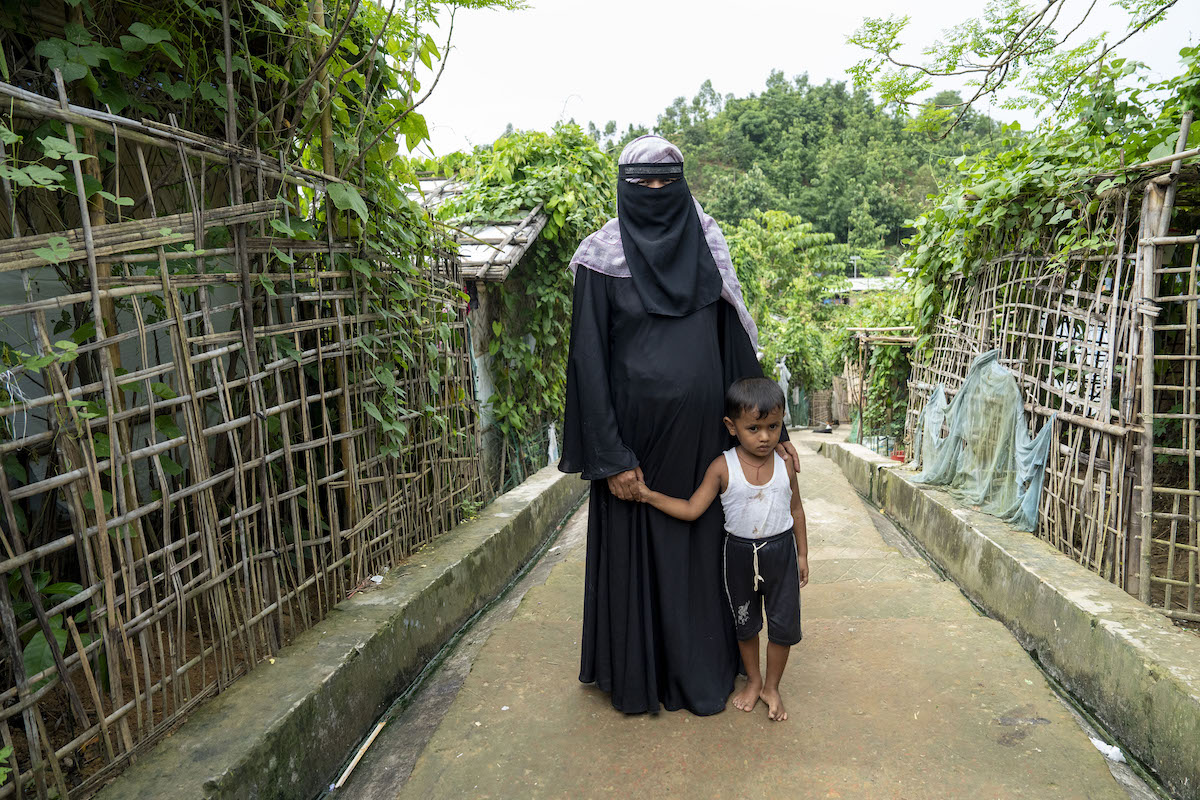
In any refugee crisis, the needs of a host community are often overlooked. Cox’s Bazar has historically been a low-income area of Bangladesh. In 2017, it had a population of around 2.3 million people. The sudden arrival of 1.2 million refugees made that population surge by more than 50%. This has put stress on limited resources, driven down daily labor wages, and increased the cost of basic goods.
“There is huge socioeconomic and environmental pressure, resulting in increased tension between refugees and the host community,” Concern Bangladesh’s then-country director A.K.M. Musha said in 2023. “The tensions will continue to increase unless the host communities are supported well. It's a difficult situation for all.”
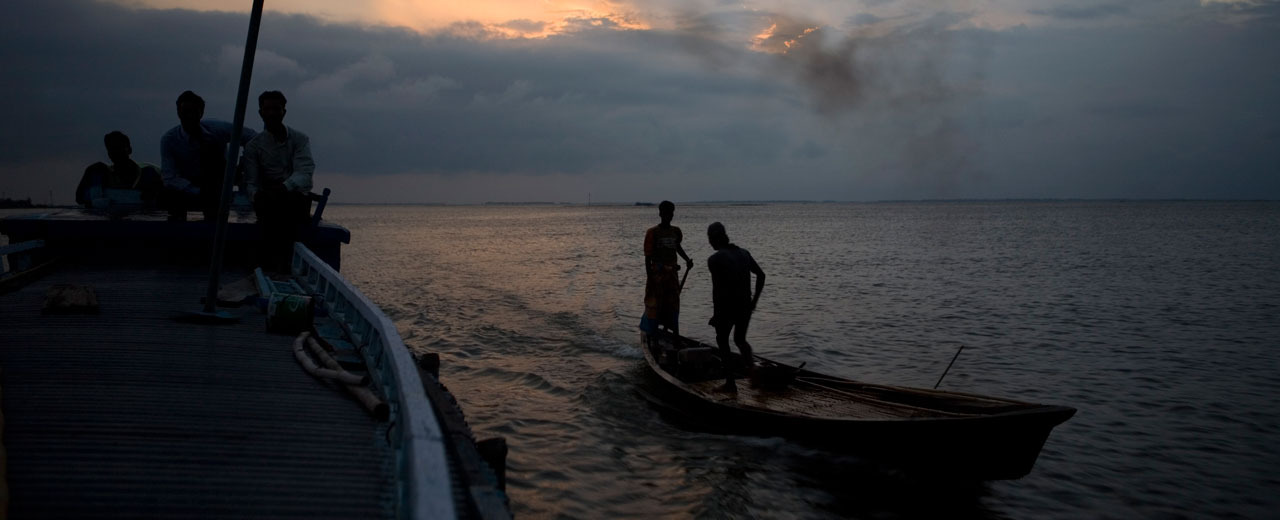
Faced with a deteriorating situation, many Rohingya see no viable future in the camps. In recent years, many have attempted dangerous sea journeys in hopes of finding more opportunities in other countries. Last year, nearly 900 Rohingya were killed or lost at sea. By April 2026, a new record was set as boat departures nearly doubled compared to 2025 amid aid cuts and insecurity.
“Nine years is too long to remain displaced. Ten years must not become the beginning of another decade of waiting.”
For Concern Bangladesh’s current country director, Manish Kumar Agrawal, this is no longer a question of how long can this response continue, but rather: “What will it take to create a future where Rohingya people can live safely, freely, and with dignity?”
The humanitarian response remains essential, but also essential at this point are sustained international solidarity, meaningful support for both refugees and host communities, and finding a pathway to safe and voluntary return.
“Nine years is too long to remain displaced,” adds Agrawal. “Ten years must not become the beginning of another decade of waiting.”
The Rohingya Crisis: Concern’s response
Concern was one of the first organizations to respond to the mass displacement in Bangladesh. Over the last nine years, we have worked with hundreds of thousands of Rohingya refugees, providing nutrition support, healthcare services, child protection, and livelihoods programming. At the same time, we have worked with the host community in Cox’s Bazar to maintain their own food, nutrition, and financial security.
Last year, we continued to focus on improving health and nutrition outcomes within the camps. Across 17 nutrition centers, we supported 317,000 Rohingya by managing cases of acute malnutrition, providing psychosocial support, and helping families to set up their own home gardens (thereby improving daily food security).
More broadly, through both our Integrated Nutrition Support program and our work with the ShuBash consortium (partnering with fellow NGOs including the IRC and Bangladesh’s Society for Health Extension and Development), we reached a total of 442,000 Rohingya and host community members. These initiatives delivered life-saving emergency relief while also supporting long-term resilience, allowing families to both meet their immediate needs and build for a better future.