Timeline: South Sudan’s history at a glance
Jul 3, 2026
To better understand South Sudan’s crisis in 2026, here’s an at-a-glance look at its history over the last two centuries.
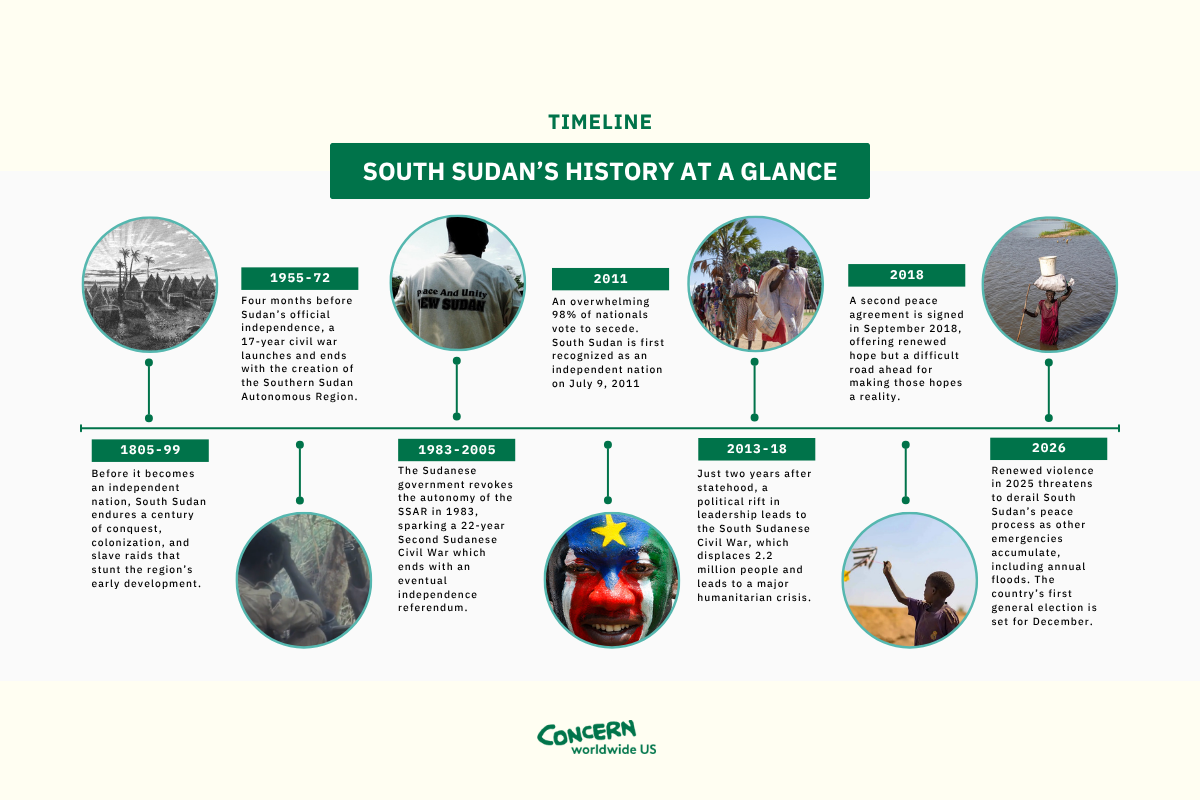
1805-99: Conquest and colonization undermines the south
Before it becomes an independent nation, the area known as present-day South Sudan endures a century of conquest, colonization, and slave raids that stunt the region’s early development.
What is now present-day Sudan and South Sudan is subject to millennia of conquest. Geographical boundaries, including the White Nile River, lead to a majority-Arab north Sudan and a largely Black African south. Historians point to the 19th-century reign of Egypt’s Muhammad Ali as a key turning point in the Sudanese slave trade, with raids focused on the southern region of the territory.
At the turn of the 20th Century, the United Kingdom and Egypt sign a joint-governance agreement that effectively makes modern-day Sudan and South Sudan one British colony. In this time, however, British officials and missionaries focus their resources on the northern parts of the region. This leaves the territory that is now South Sudan chronically underdeveloped in terms of basic infrastructure, healthcare, and education.
1947-56: A unified Sudan and the push to independence
In a rapid sequence of events, Sudan’s southern provinces are integrated with the north, the Egyptian Revolution removes British influence, and Sudan becomes an independent, unified nation.
At a conference in what is now the South Sudanese capital of Juba, an advisory council agrees to more fully integrate governance of southern provinces with the north. Five years later, the Egyptian Revolution removes British influence over the country. Because of the previous arrangement between both countries, this also leads to Sudan gaining independence from both Britain and Egypt. Independence takes effect on January 1, 1956.
1955-72: The First Sudanese Civil War creates a southern autonomous region
Four months before Sudan’s official independence, a 17-year civil war launches and ends with the creation of the Southern Sudan Autonomous Region (SSAR).
History isn’t always sequential. Four months before independence goes into effect, civil war breaks out between the Sudanese government representing the north and a unified separatist movement in the south. The conflict lasts for 17 years, ending with an agreement signed in Addis Ababa, Ethiopia, that leads to the creation of the Southern Sudan Autonomous Region (SSAR).
1983-2005: The longest civil war in African history
The Sudanese government revokes the autonomy of the SSAR in 1983, sparking the 22-year Second Sudanese Civil War, leading to an eventual independence referendum.
Unlike the First Sudanese Civil War, this second conflict features more divisions among the southern coalition. More South Sudanese die due to local infighting than at the hands of northern forces, including the brutal Bor Massacre of 1991. This massacre, combined with a resulting famine in the same year, claims an estimated 27,000 lives.
The 22-year-long civil war is the longest in Africa’s history, and casualties exceed 2.5 million by the time a Comprehensive Peace Agreement is signed in Nairobi in 2005. This agreement makes Southern Sudan a semi-autonomous region and guarantees a referendum on independence within six years.
2011: Independence
An overwhelming 98% of nationals vote to secede, making South Sudan the world's newest recognized nation — though independence is marked by internal conflict.
South Sudan is first recognized as an independent nation on July 9, 2011, making it the 54th country in Africa and the 193rd country to join the United Nations.
While largely seen as peaceful, this secession is not totally free of violence. Conflict is reported in nine of the country’s ten states in 2011.
2013-15: The South Sudanese Civil War causes 2.2 million to flee
Just two years after statehood, a political rift in leadership leads to civil war.
Insecurity in the wake of independence reaches a political breaking point in July 2013. After a few months of relative calm, violence erupts in December between factions in South Sudanese leadership.
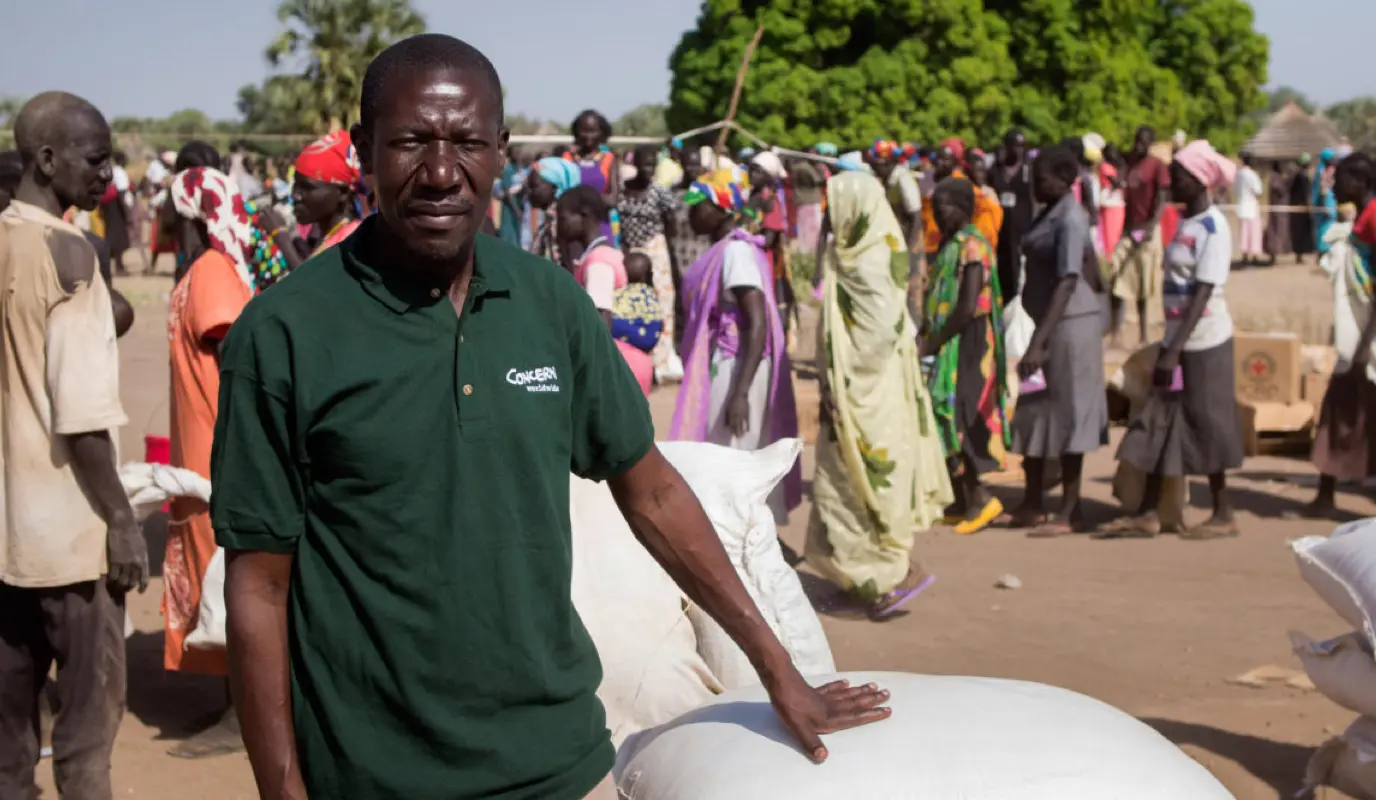
By March 2014, 1 million South Sudanese are pushed out of their homes due to violence. 800,000 are internally displaced and face the continued threat of attacks. This number more than doubles by May 2015, with 2.2 million people forced to flee. This displacement crisis also triggers a hunger crisis.
2016-18: A fragile ceasefire followed by famine
A peace deal signed in August 2015 falls apart in the spring of 2016, leading to a famine in 2017.
In the spring of 2016, less than a year after the peace deal is signed, fighting resumes between the two factions, leading to hundreds of casualties in the initial months.
The fighting becomes so severe that, in June 2017, famine is confirmed in parts of the country’s Unity State.
2018-21: Second peace deal and stalled transitions
A second peace agreement is signed in September 2018, offering renewed hope but a difficult road ahead for making those hopes a reality.
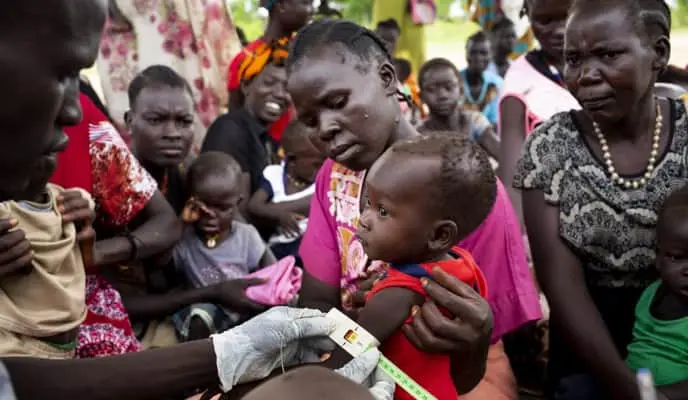
In 2019, 7 million people in South Sudan were left hungry in the wake of food insecurity driven by more than five years of conflict, and the United Nations warning that more people would be at risk without a scale-up in humanitarian aid.
Despite the peace treaty, armed conflict continues through 2020, and the UN maintains a peacekeeping mission in the country. 1.3 million South Sudanese remain internally displaced, many living in Protection of Civilian or POC sites. In April 2021, as South Sudan approaches its 10th birthday, the UN warns that delaying the peace process — including the drafting of a national constitution — could lead to a full-scale renewal of conflict.
2019: Consecutive floods add to a national crisis
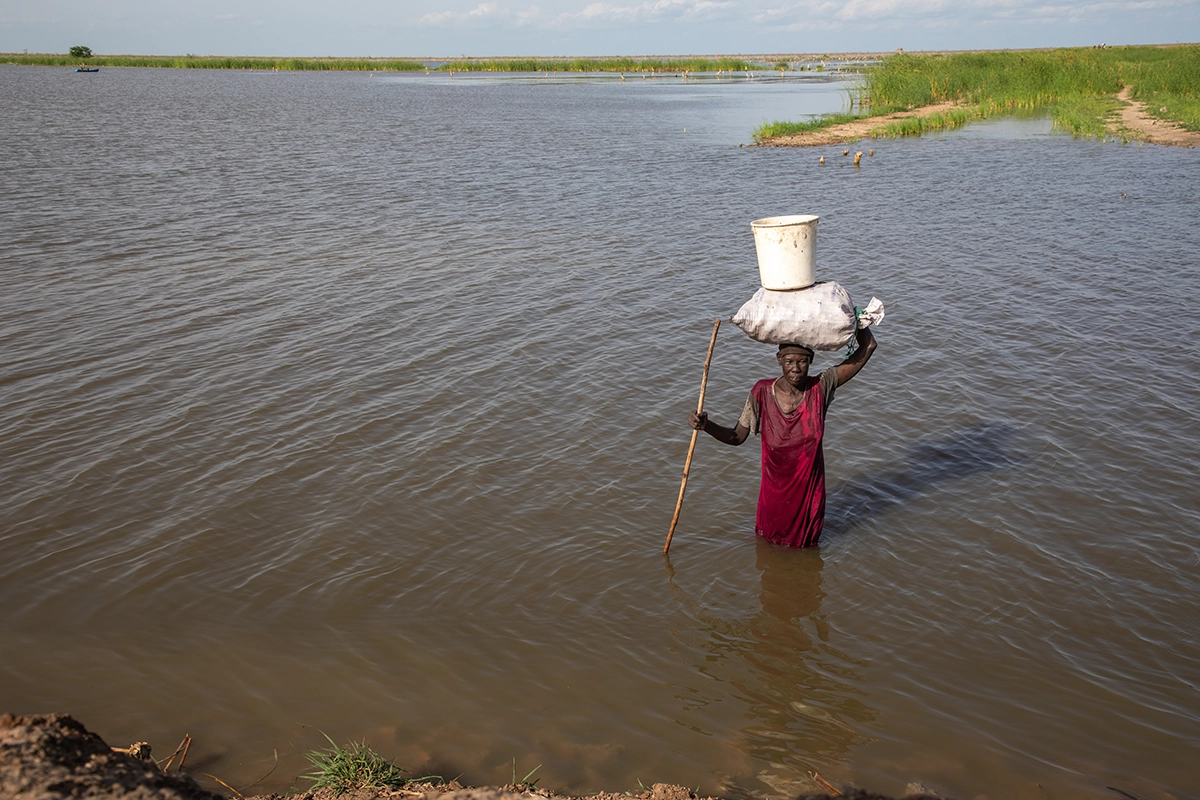
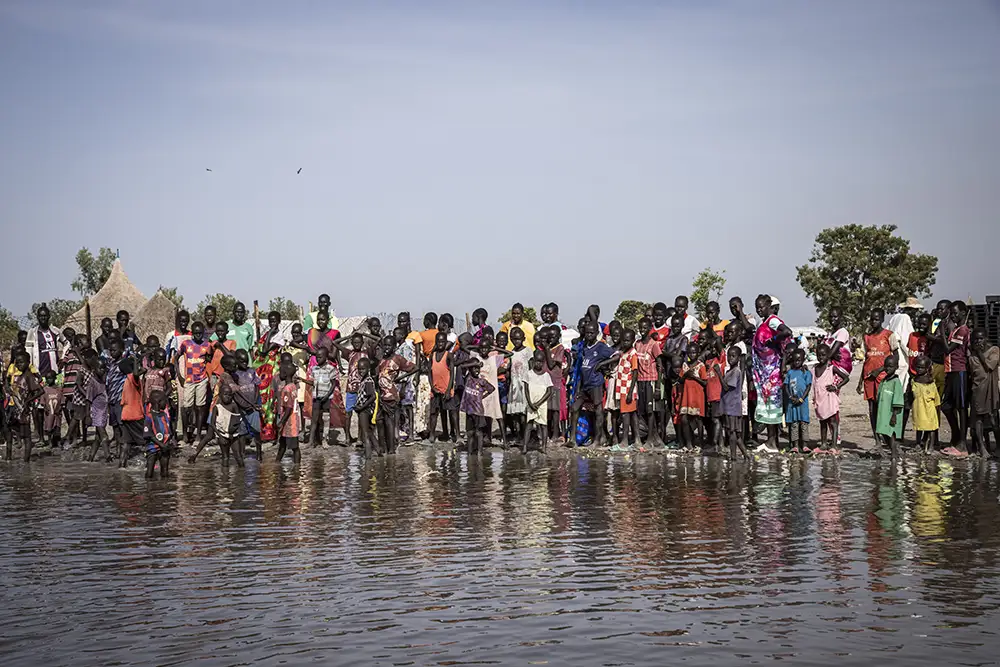
In 2019, South Sudan enters an unprecedented cycle of annual flash floods that displace millions over the next eight years, turning a political crisis into a permanent climate emergency.
These floods affect roughly 1 million people annually (if not more) and leave large parts of the country caught in what Concern South Sudan staff have described as a “semi-permanent relief phase” — constantly recovering from the last floods just as the next ones hit.
Floods aren’t the only natural disaster that South Sudanese have to worry about, however: In 2026, the country experiences a “flood-drought paradox,” in which more than half of the country is inundated by floodwaters, while other regions face prolonged droughts that decimate crops and livestock.
2023-24: The impact of a neighboring crisis
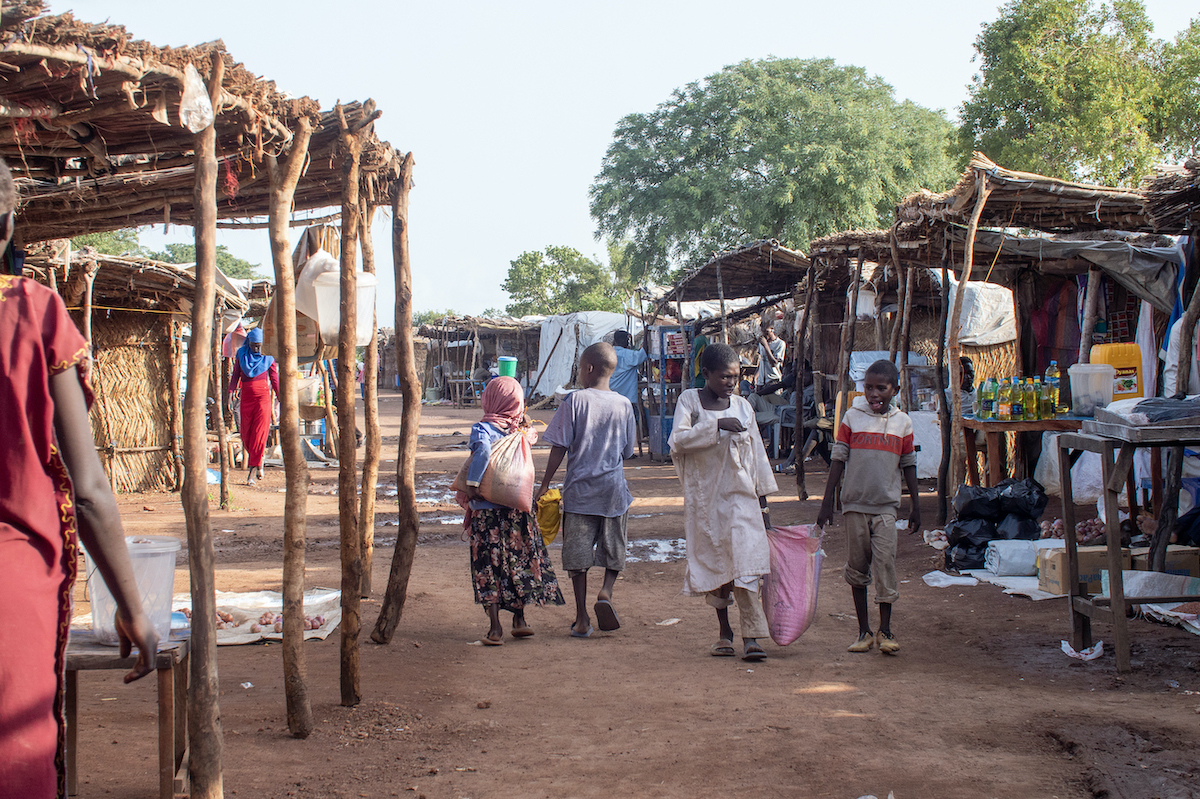
Conflict breaks out in neighboring Sudan on April 15, 2023, leading to massive population movements and an escalating financial crisis.
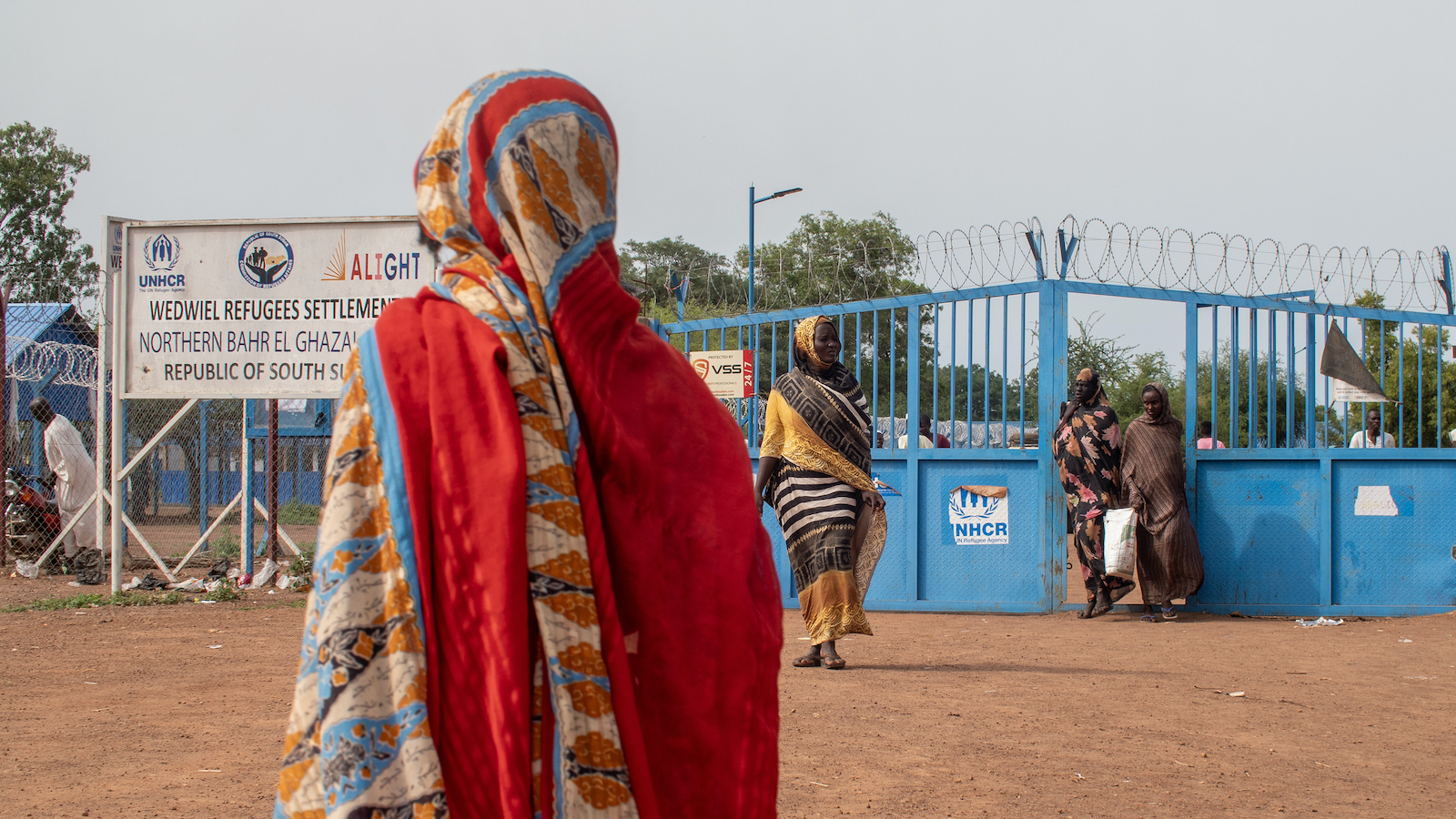
Many South Sudanese citizens living as refugees in Sudan return home, along with newly-displaced Sudanese refugees, to flee the violence that quickly overtakes the country. Displacement sites and NGOs work to keep up with these increases in demand amid dwindling funding and limited resources.
In 2024, more than 70% of South Sudan (some 8.4 million people) require humanitarian assistance, including 4.5 million children. This need surges in the second half of the year when South Sudan is forced to halt oil exports, which run through the Port of Sudan. This leads to further inflation and economic contraction and renewed tensions.
South Sudan’s first general elections since independence — a key milestone for their transition to peace that has been delayed several times already since their initial date in 2025 — are once again rescheduled from the planned date of December 2024, creating additional pressure.
2025-Present: A threat of renewed conflict and compounding emergencies
Renewed violence in 2025 threatens to derail South Sudan’s peace process as other emergencies pile up.
Violence escalates in 2025, particularly in the Upper Nile State, with the future of the 2018 peace agreement left more uncertain. With hostilities continuing into the new year, a date is set for general elections: December 22, 2026.
Concern in South Sudan
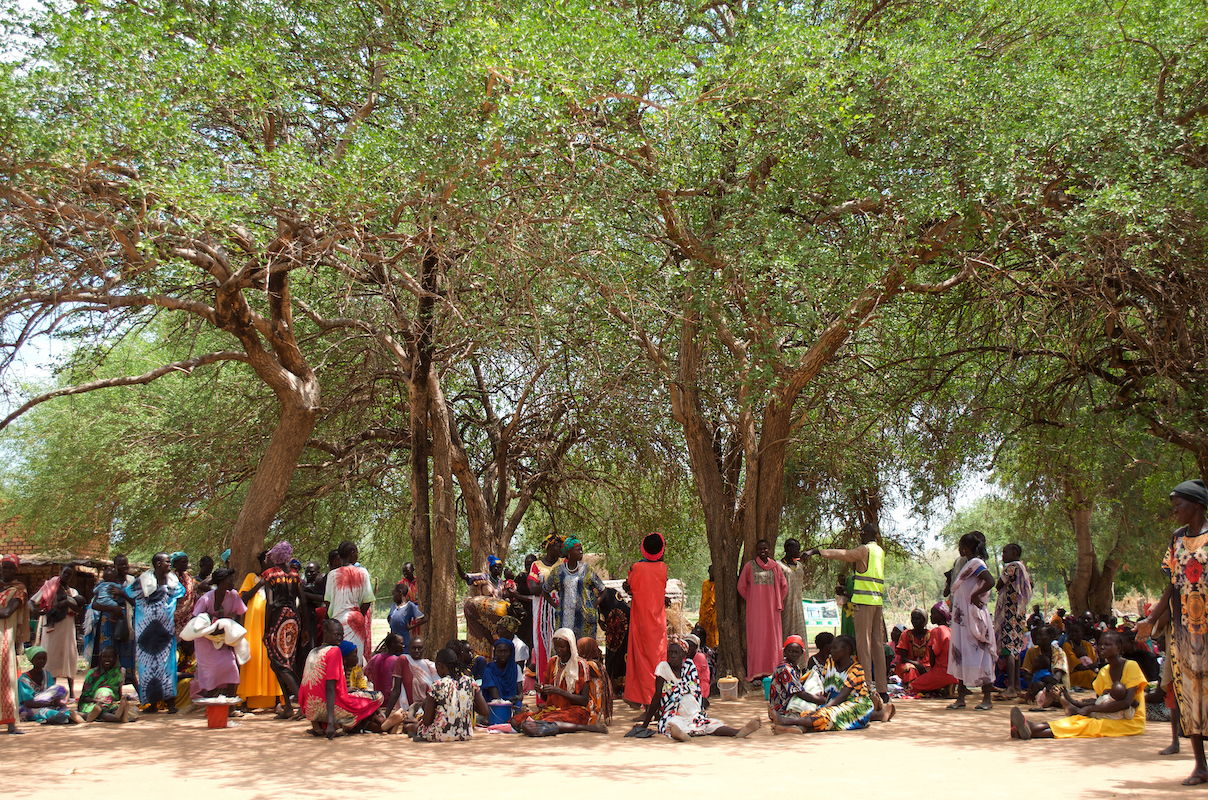
Concern has been on the ground in South Sudan since before it was an independent nation. Over the last 15 years, our teams have worked alongside local communities to deliver rapid emergency relief while empowering families to build long-term resilience against floods, droughts, and conflict.
Last year, we reached nearly 765,000 people through delivering essential healthcare, critical nutrition screenings, direct cash assistance, and integrated programs designed to address the interdependent issues at the heart of this crisis. We work with flood- and conflict-affected communities, including areas hosting refugees and returnees from Sudan, providing lifesaving services to communities that were previously unreachable.
Every breakthrough we achieve is a testament to the power of collective action. Your support allows our teams to sustain this vital progress, scale our programs, and build a more resilient future for tens of thousands of families every year.