The fight for a childhood near the Ukrainian frontlines
May 5, 2026
In Ukraine’s frontline regions like Kharkiv, children have spent the last four years living with conflict, while trying not to grow up too fast. Here's how Concern is helping them hold onto childhood—while providing the psychosocial support they need to cope and recover.
Kharkiv is the second-largest city in Ukraine, and even temporarily served as the country’s capital about a century ago. Its wealth of culture and history has spread to the surrounding oblast or region (also called Kharkiv). But to Victoria*, what makes the region special is something more personal.
“People from Kharkiv are different from others in Ukraine,” she tells us. “They are more funny and open and have a special quality.”
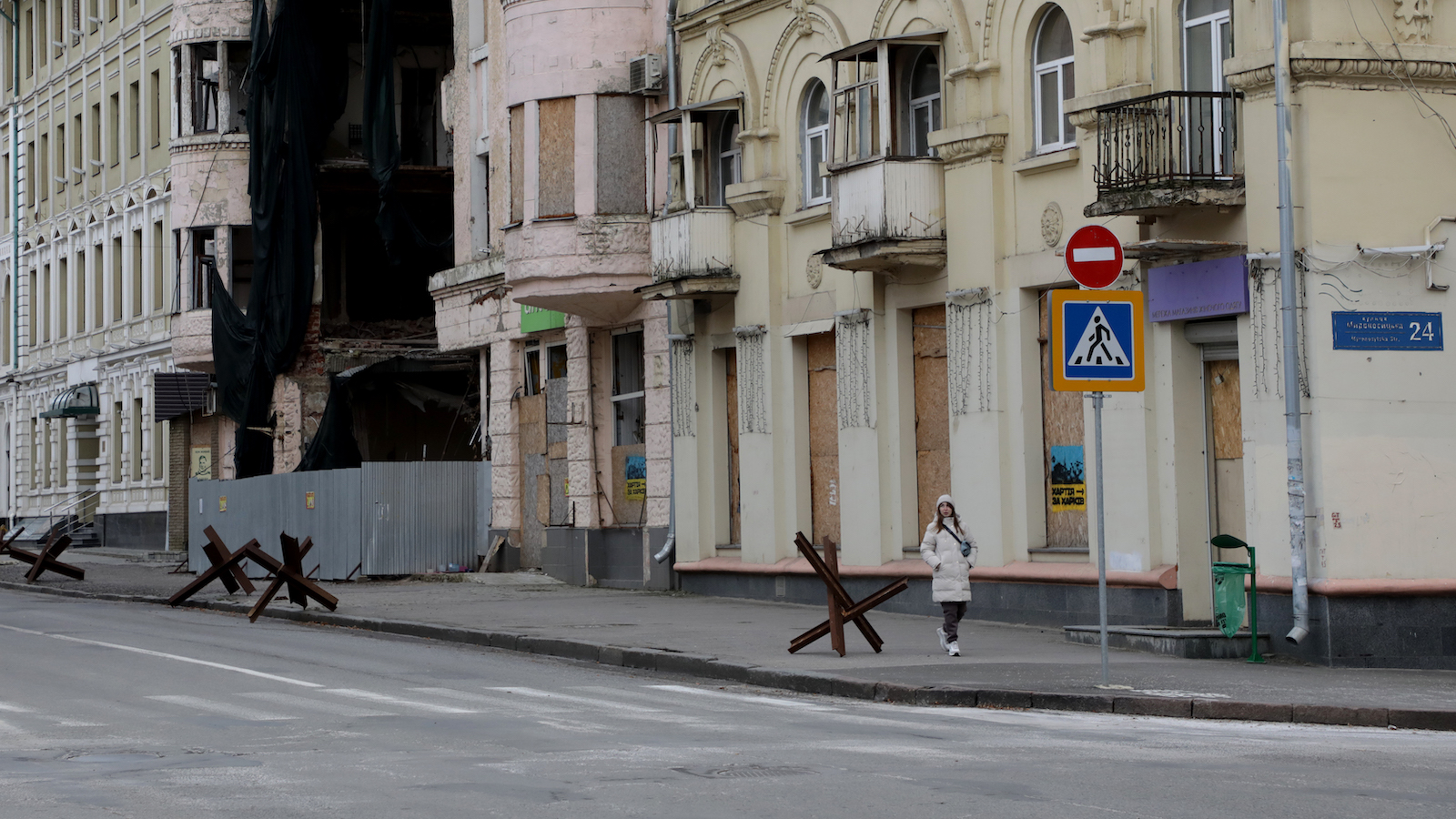
While that central quality remains the same after more than four years of full-scale conflict, Kharkiv has been hit especially hard by attacks given its location—just 20 miles from the Russian border.
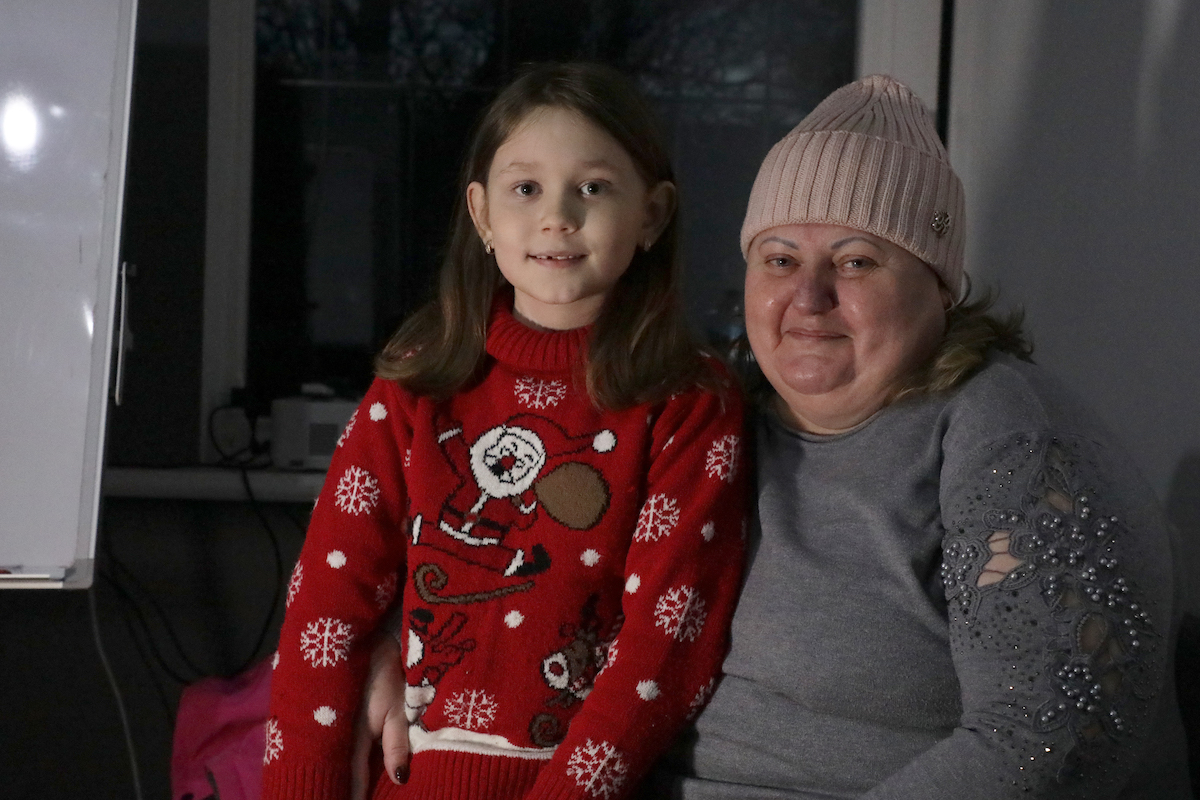
“Before the war, it was a wonderful life,” Victoria adds. She lives in Slobozhanske, a smaller city in Kharkiv oblast, with her husband and her youngest daughter, eight-year-old Yana*. Her adult children and two grandchildren also lived nearby, and she had a job as a chef in the kindergarten that Yana had just begun to attend.
The day everything changed
Victoria remembers the day it all changed in February, 2022. She went to work and Yana went to school, as usual. Then the school officials ordered all staff and students to go home. Victoria realized the invasion had begun.
“We returned home and did not know what the future would bring,” she says. Her husband joined the Ukrainian Armed Forces, and shelling and sirens have become a constant feature of her family’s life now.
While Yara continues her education through online classes, she doesn’t get to see her peers offline. When she’s not in the virtual classroom, she plays with her pet friends at home: a dachshund named Rex, plus a cat, a hamster, and a parrot. She and Victoria bring them all with them to the shelter during air raids.
“It’s very difficult,” Victoria says. “You live in difficult and dangerous circumstances, and at the same time you’re worried about your loved ones all the time, and hearing stories of people dying—military, civilians, and children.”
Lost childhoods
It’s the children Victoria worries about the most, as a mother and a grandmother as well as someone who worked in a kindergarten up until 2022.
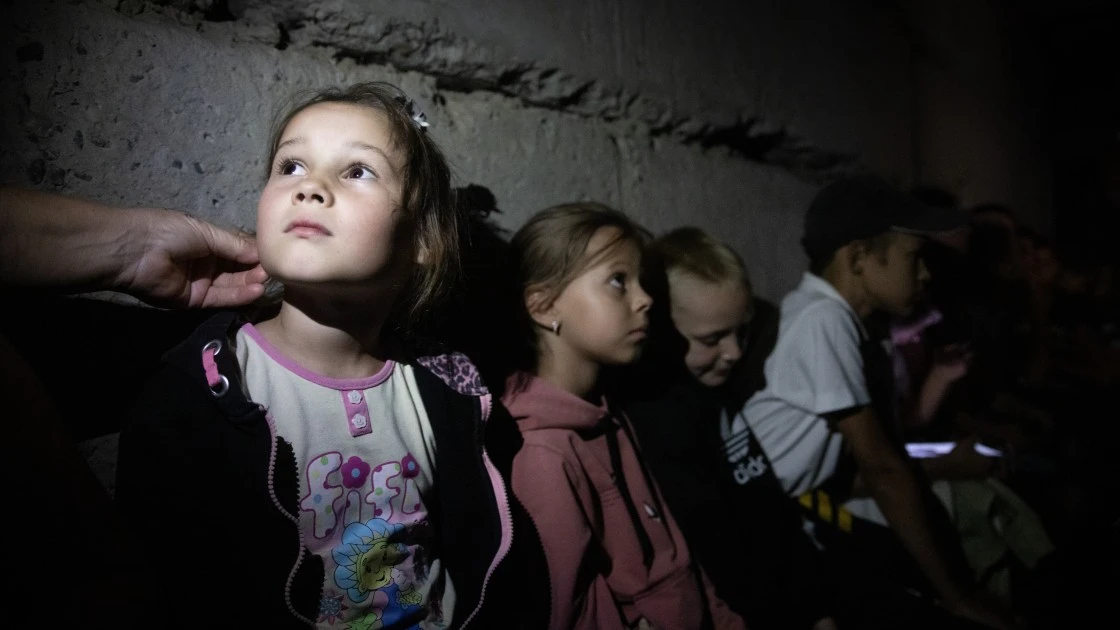
“They live almost completely without electricity and often without heating,” she told us in December, at the start of one of the harshest winters Ukraine has experienced in the last decade. “They can’t go to school or communicate often with other children. Their mothers, fathers, and grandparents may be fighting in the war.”
She’s especially concerned about Yana, who has yet to attend school in-person (apart from a few months of kindergarten). She’s missed out on socializing and making early friendships with her peers, and while Victoria is proud of the progress Yana has made in her classes, “she is pretty shy and is often slow to trust people.”
When conflict becomes a mental health crisis
Even if mental healthcare isn’t always culturally perceived as an immediate priority, the psychological impact of the war in Ukraine has been felt across the country, and especially places like Kharkiv (which is the name of both the city and its surrounding oblast) which sit closest to the frontlines.
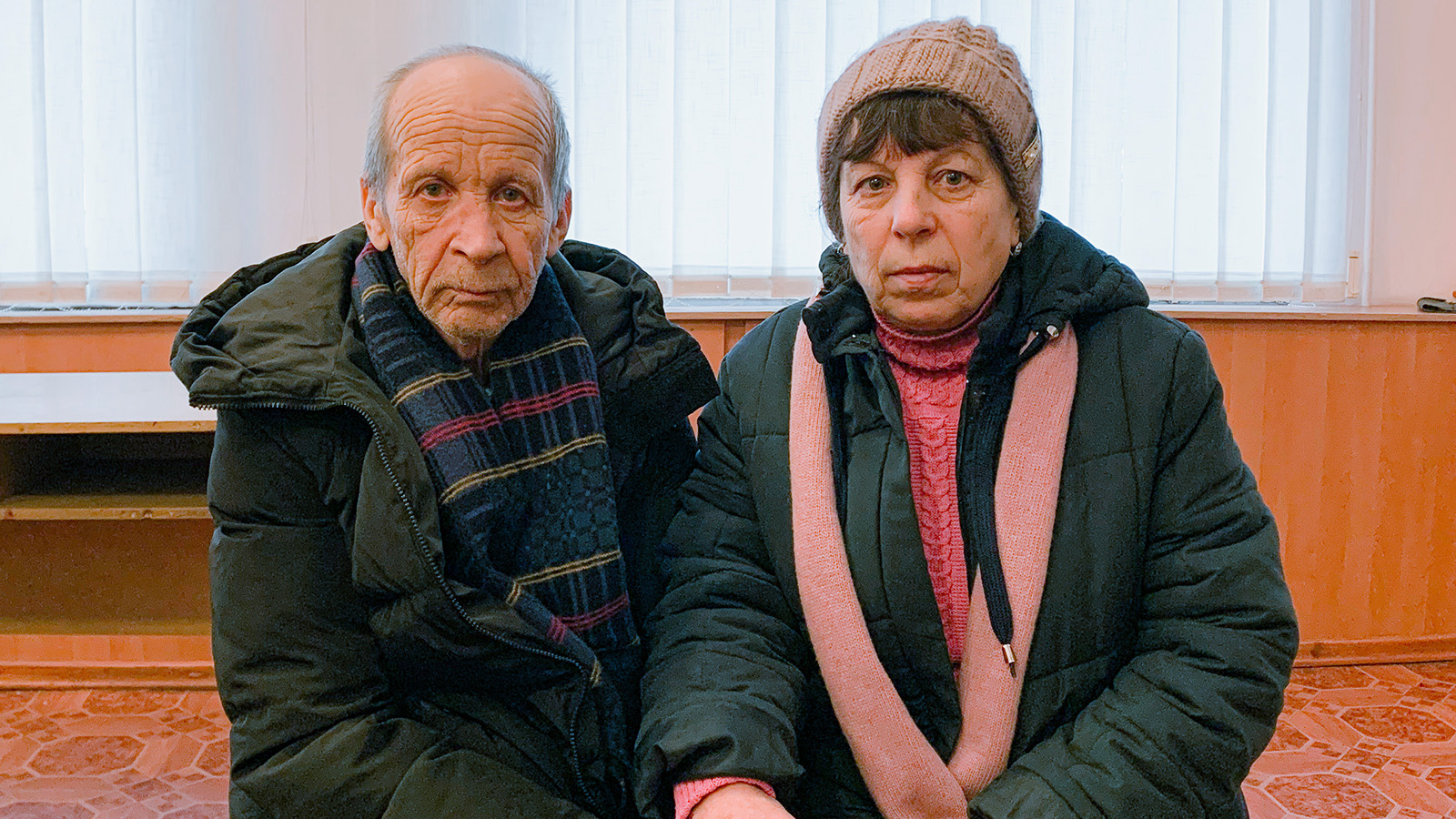
Different people are affected in different ways—older Ukrainians, for instance, have talked about experiencing this in the context of a lifetime of political instability, upheaval, and transition, while younger Ukrainians have felt their lives placed on hold.
After four years, many young children only remember life after February 2022. While adults also need help, they have more tools to work through the emotional upheaval of such a major event. Children, still developing, can face a tougher road ahead without the right support. One thing Olga, a psychologist working with Concern and our national partners in Ukraine, mentions seeing a lot are children who have been limited in their communications skills since 2022.
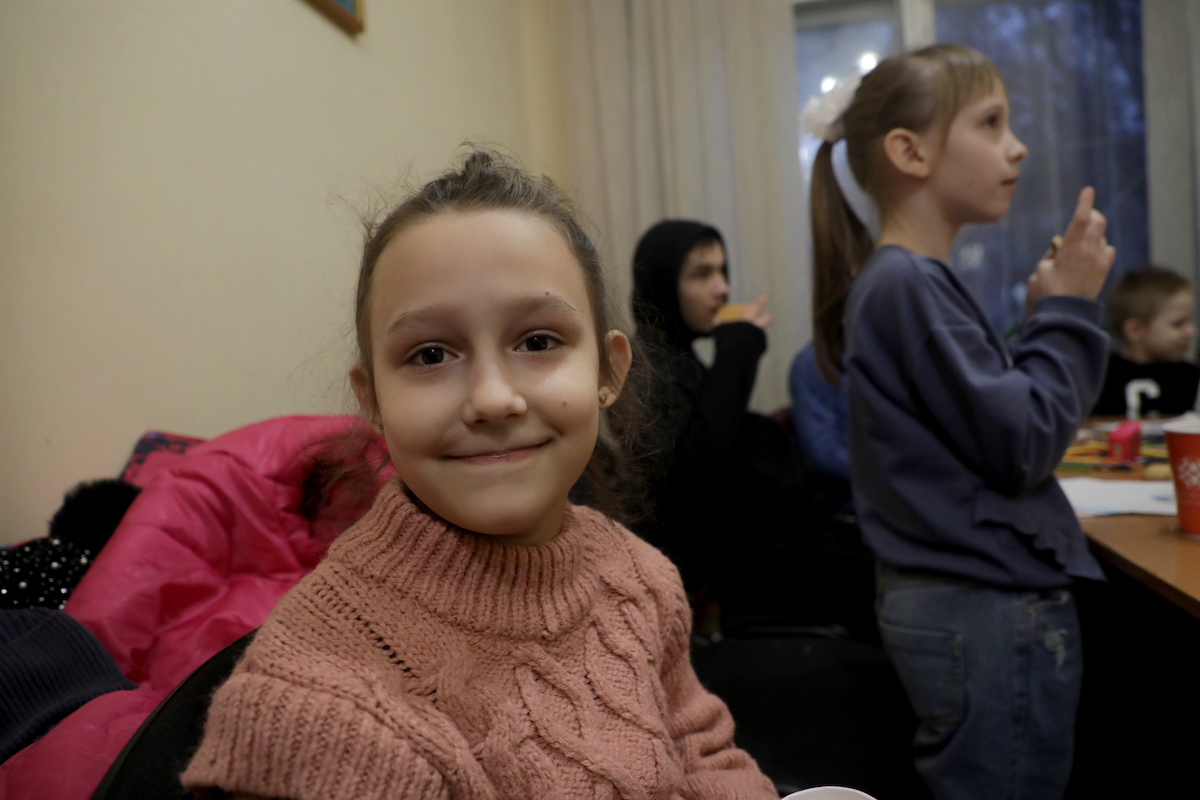
Seeing the good
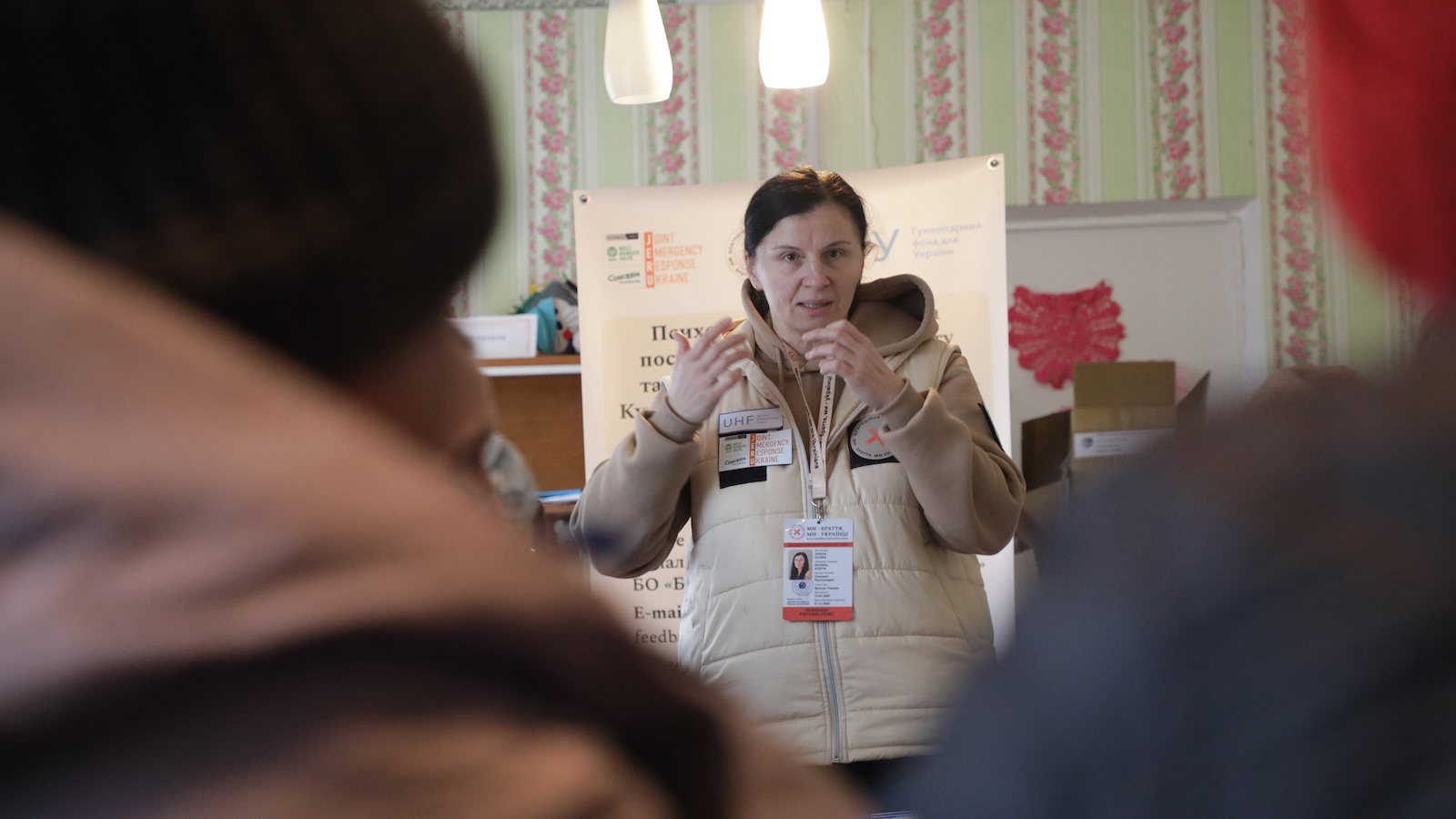
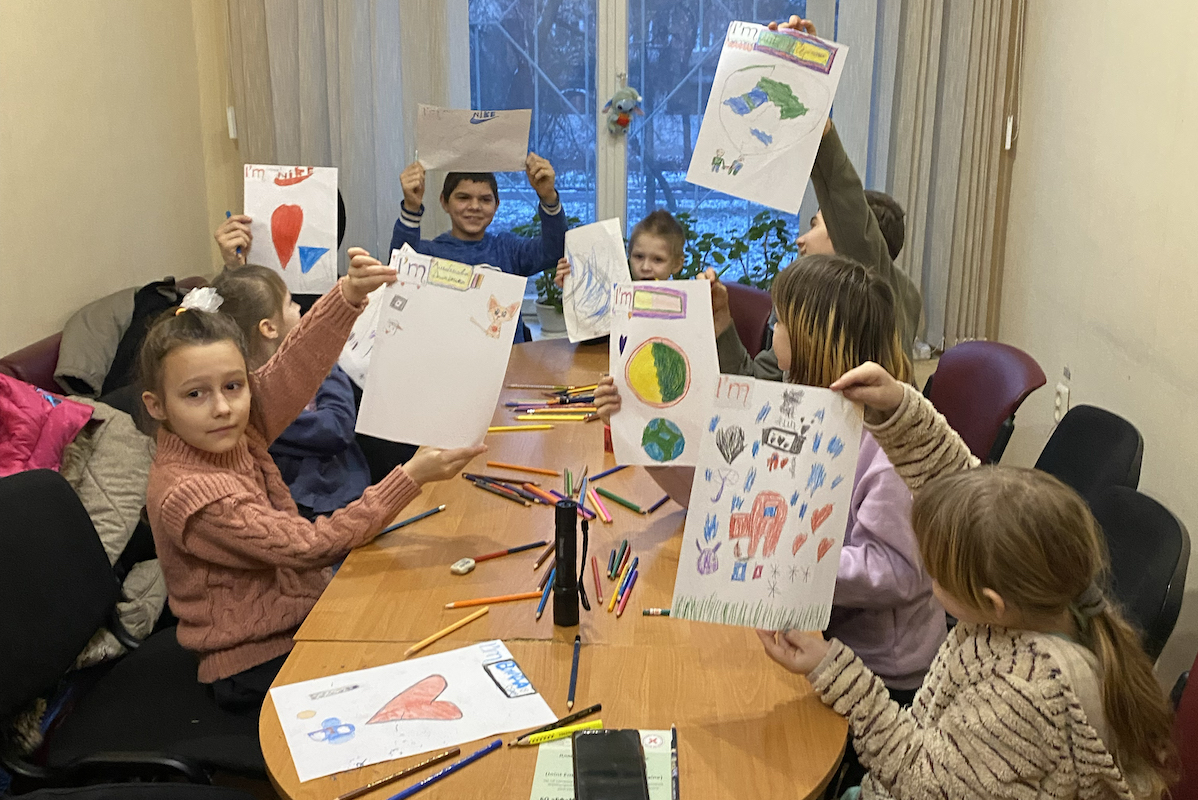
“The main goal of these sessions is personal development and emotional and psychological stability. It’s important to support children’s resilience in their development,” says Olga, a psychologist with 11 years of experience who now works with Concern and our national partners in Ukraine. She leads group-based psychosocial support sessions for children in Kharkiv.
Many of the children Olga sees are not only experiencing the trauma of conflict firsthand; they also come from military families and have parents who are either in combat or who have lost their lives.
“Here we can support them,” Olga adds of the children who have experienced loss. “Here they can see something good. It’s important for them to experience this positive atmosphere.”
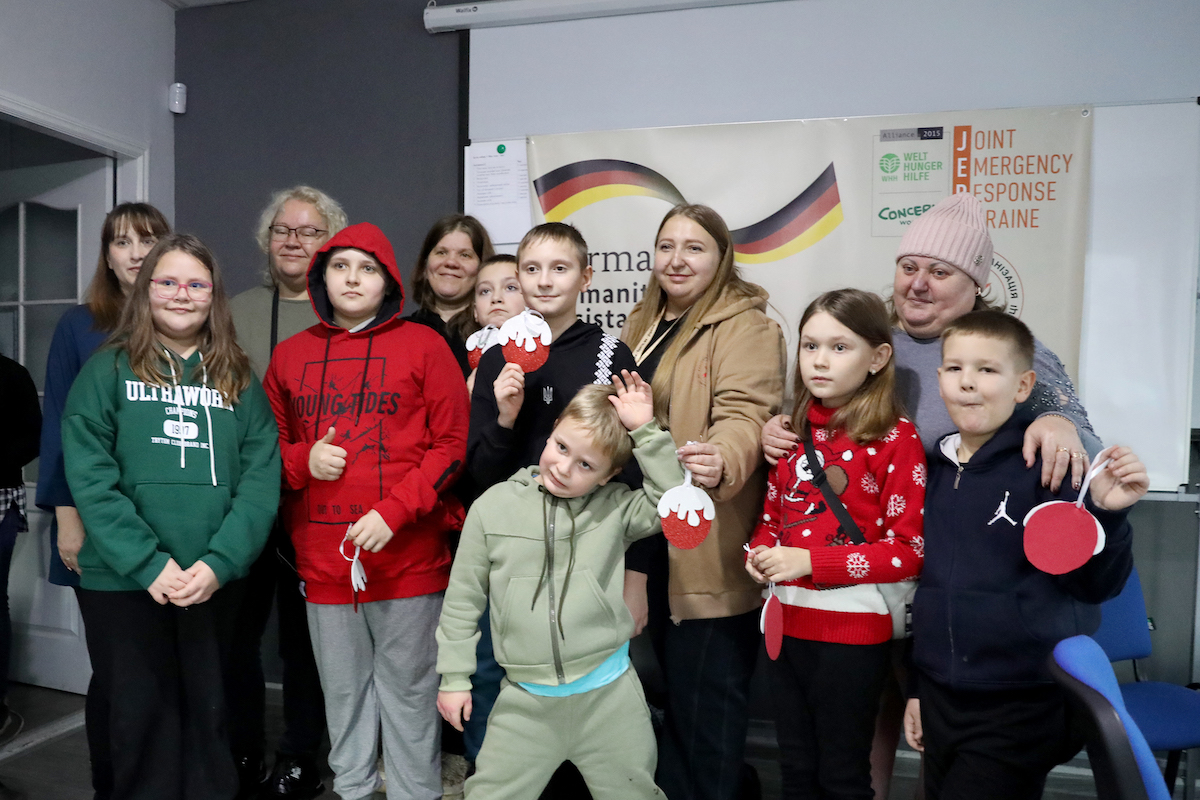
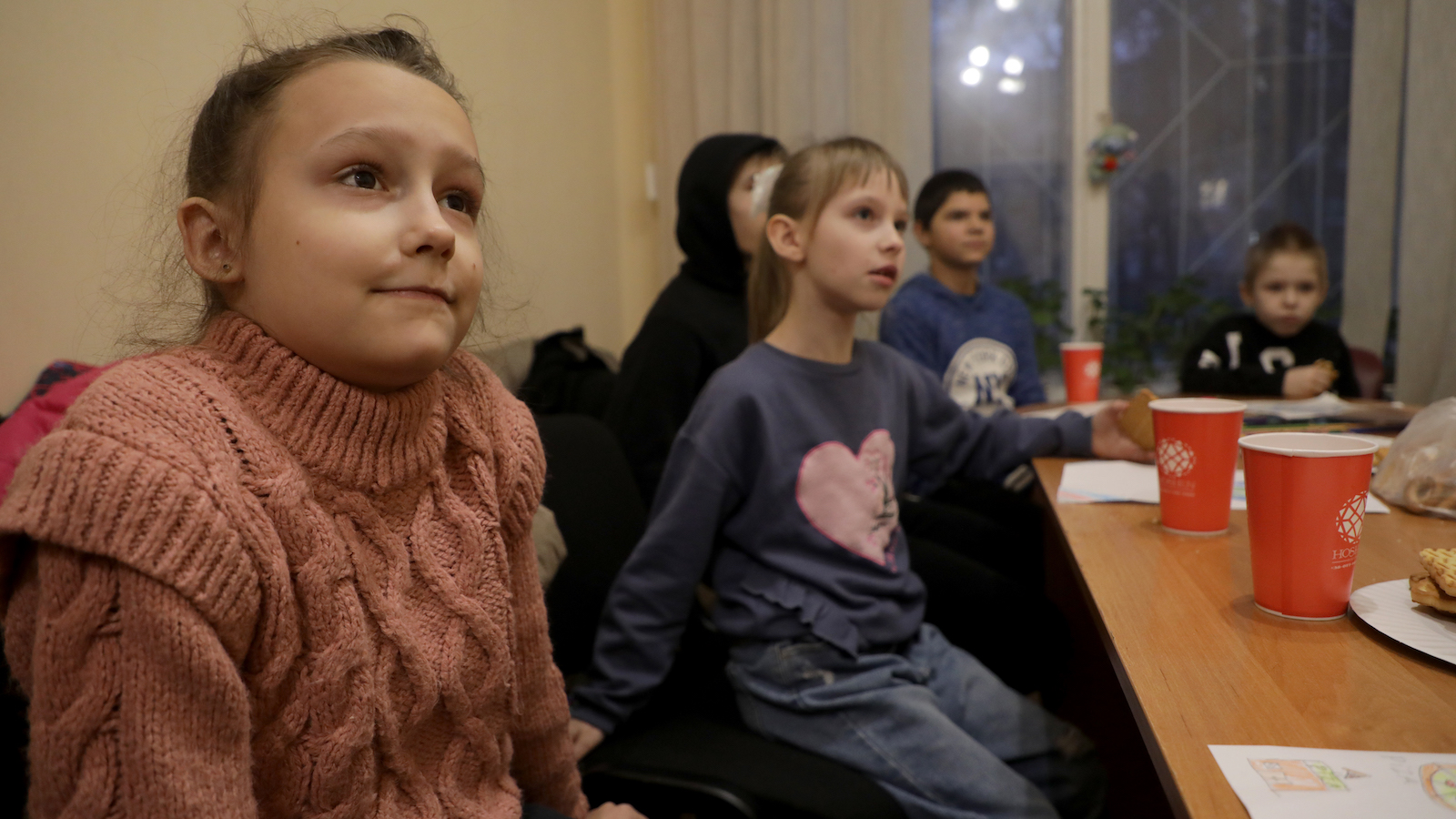
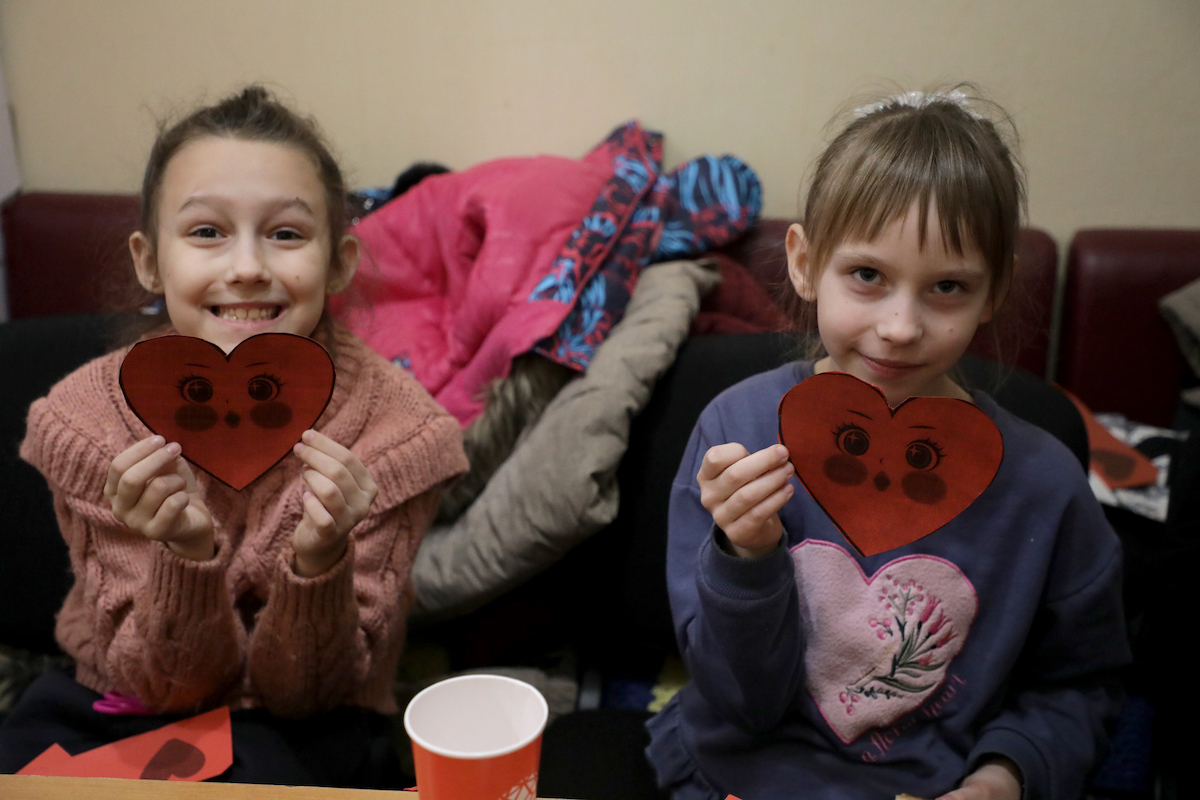
These sessions are designed to support development and be a safe space to express emotions, but they’re also places for kids to simply be kids. Sessions include games and arts and crafts, giving participants a creative outlet. They provide a vital outlet for the energy that children still have, even amid late-night air raid sirens and constant uncertainty.
“It is very difficult to do this work when there has been shelling all night and no one has slept, but even then people are still eager to attend sessions,” adds Olga.
Support Concern's psychosocial programs
A breath of fresh air
Victoria saw an advertisement for Olga’s sessions and signed Yana up, excited for an opportunity for her daughter to meet other children and have some time each week to forget about the harsh realities of daily life.
“The program is like fresh water for the people who participate,” says Olga. “Nowadays, communication is pretty limited between people and sessions like these allow people to share their experiences and get some rest from the hardships of daily life.”
In her first session, Yana made new year’s ornaments and played games with other children around her age—something she has been missing out on for a while.
Seeing her daughter be a kid again was a breath of fresh air for Victoria as well. “We would all like to live in a peaceful environment, and not be afraid to sleep,” she says. “We would like to breathe normally again. For our children to go to a normal school and live a normal life.”
*Names of program participants changed for security purposes
The crisis in Ukraine: Concern’s response
Concern has been responding to the crisis in Ukraine since the initial weeks, working collectively with our Alliance2015 partners to deliver assistance via the Joint Emergency Response in Ukraine (JERU). Our emergency response focuses on frontline oblasts including Sumy, Kharkiv, Mykolaiv, Zaporizhzha, Kherson, and Donetsk.
Through the strategic pooling of resources, JERU was able to support over 114,000 people last year with cash transfers, food and hygiene kits, and winterization support for frontline communities. In tandem with this, we’ve also expanded our focus to work on long-term economic recovery through the introduction of livelihood programs in both cities and rural areas.
These programs work on several levels, helping families to rebuild and safeguard their livelihoods while also increasing social and economic inclusion and strengthening community resilience.
» Learn more about our work in Ukraine