The crisis in Yemen, explained: 5 things to know in 2026
Jan 9, 2026
Learn about what's going on in Yemen, ten years into its civil war — and why Concern is now working there.
In 2014, Yemen — the lowest-income country in the Middle East — was plunged into a civil war shaped by proxy intervention. What followed was not only years of conflict, but also the erosion of nearly every system people rely on to survive.
Today, millions of Yemenis face a complex humanitarian crisis that goes beyond violence: Climate shocks, mass displacement, severe water shortages, and economic collapse have pushed two-thirds of the population into one of the world’s worst humanitarian crises.
Behind the headlines of conflict and political instability are more than 23 million civilians who require urgent assistance as they continue to bear the long-term consequences of a crisis that shows no clear end. Here’s what you need to know in 2026.
1. Two-thirds of Yemen’s population will require humanitarian assistance in 2026 — but only half may be reached
“The most prominent change for millions of Yemenis has been the dramatic worsening of their living conditions and the daily reality of death from starvation or the diseases arising from severe malnutrition,” writes Helen Lackner in Yemen in Crisis: The Road to War. Lackner’s book was published in 2017, a year where the UN estimated that 18.8 million people required some form of humanitarian aid. The UN targeted 12 million for assistance.
In 2026, the need is even higher, with 23.1 million Yemenis requiring some basic form of support. However, the UN have targeted even fewer for support this year — some 10.5 million — due to funding shortages. This is a very common side effect of crisis fatigue, which happens when emergency situations become more protracted and harder to resolve. Unfortunately, the most vulnerable people are left to carry the greatest burden of these shortfalls. The UN estimates that more than 80% of Yemenis live below the poverty line.
2. Hunger is reaching a critical point
Before 2014, Yemen relied on imports for 70% of its food supplies. That included 90% of wheat imports and 100% of rice, tea, and sugar imports. Since the start of the conflict, supplies have been harder to get with restrictions on both the main sea port of Hodeida and letters of credit for importers. This has made supplies scarce and more expensive, especially against conflict-related inflation.
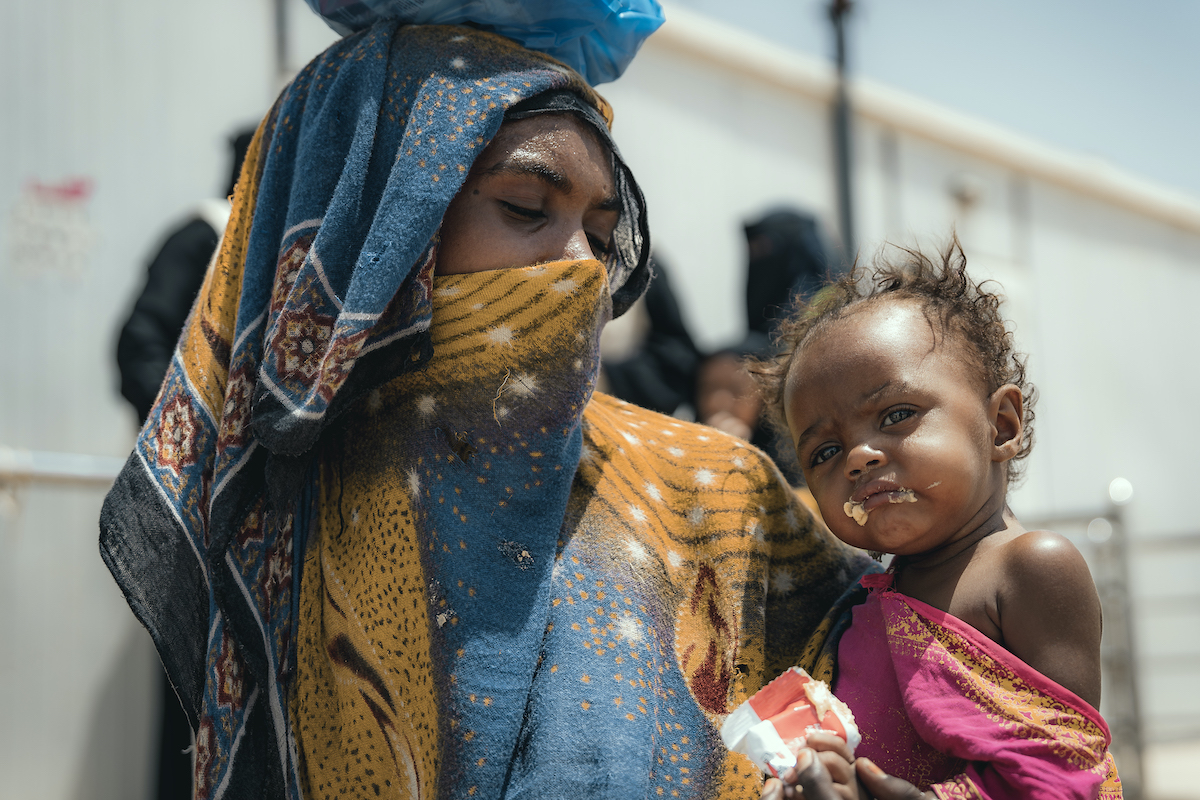
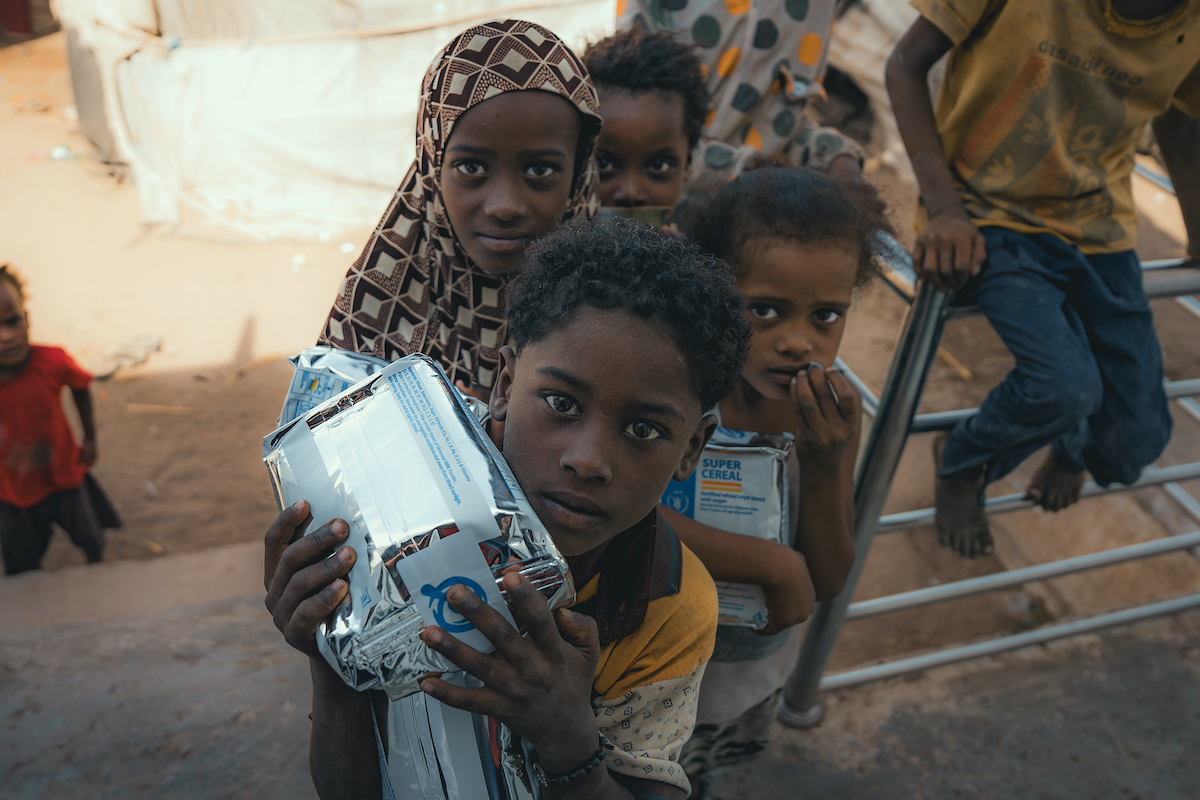
Some reforms introduced last year have shown early positive signs around stabilizing the Yemeni rial and reducing prices. However, hunger in Yemen is reaching a critical point with the Integrated Food Security Phase Classification’s latest report showing that over 52% of the population is expected to face worsening levels of food insecurity between now and the end of February, many of them children and pregnant and lactating women. Malnutrition rates have been furthered by water scarcity, natural disasters, and recent outbreaks of diseases — including the highest burden of cholera during the recent global outbreak.
3. Natural disasters are deepening the crisis
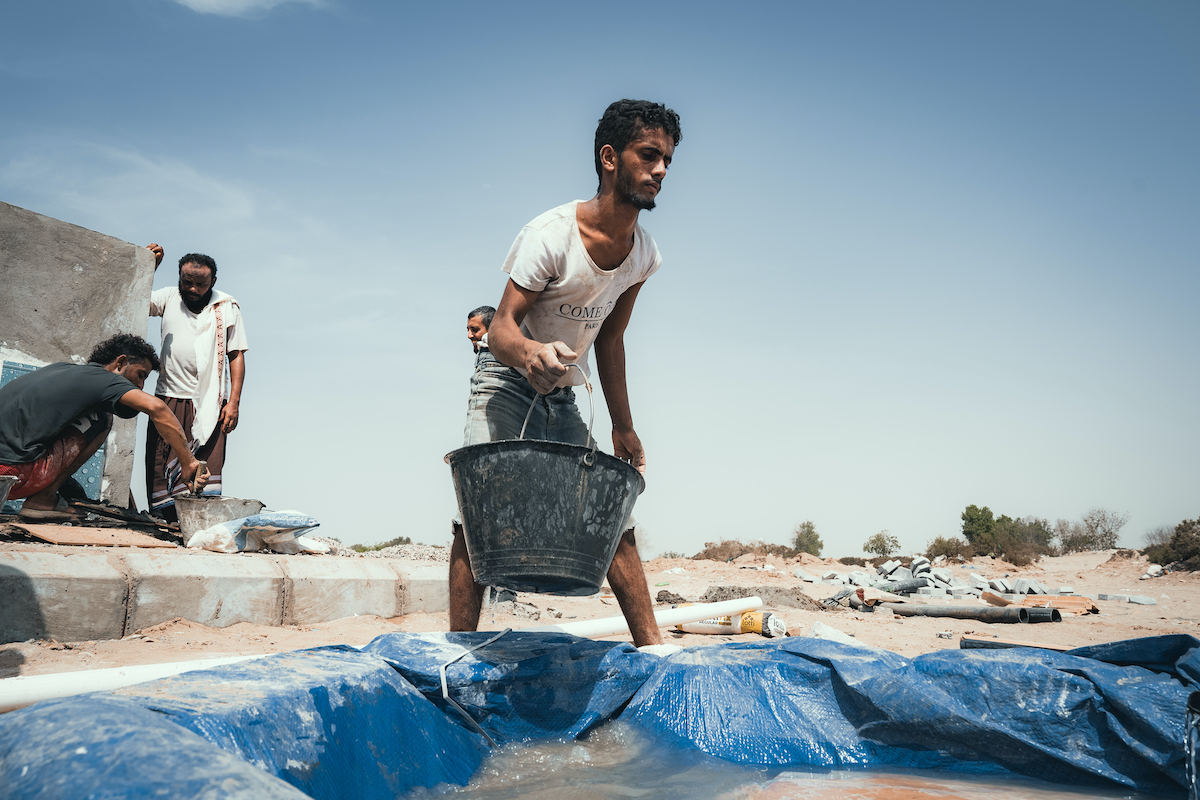
With coastlines on three bodies of water and wide swaths of desert, Yemen also faces some of the greatest climate risks in the world. Communities living along the country’s 1,500 miles of coastline (touching on the Gulf of Aden and both the Arabian and Red Seas) are vulnerable to floods during rainy seasons. Last year, a tidal surge on the country’s west coast caused flooding in the Makha and Dhubab districts, destroying homes and businesses and worsening conditions for thousands of families.
More than half of Yemen is desert, which means that dust and sandstorms are a year-round risk, especially for displaced communities. Not only do they tear up informal shelters, they also create respiratory risks and additional health hazards for people with preexisting conditions. These arid conditions, combined with failed rains, have also led to Yemen being the site of one of the largest water crises. The UN reports that the per capita share of renewable water resources in the country is just 80 cubic meters per year, a fraction of the threshold for water stress (1,000 cubic meters). With agriculture driving a large amount of income for families, these conditions have devastating consequences for livelihoods and food security, and deepen an already severe crisis.
4. Yemeni children are bearing the brunt of the crisis
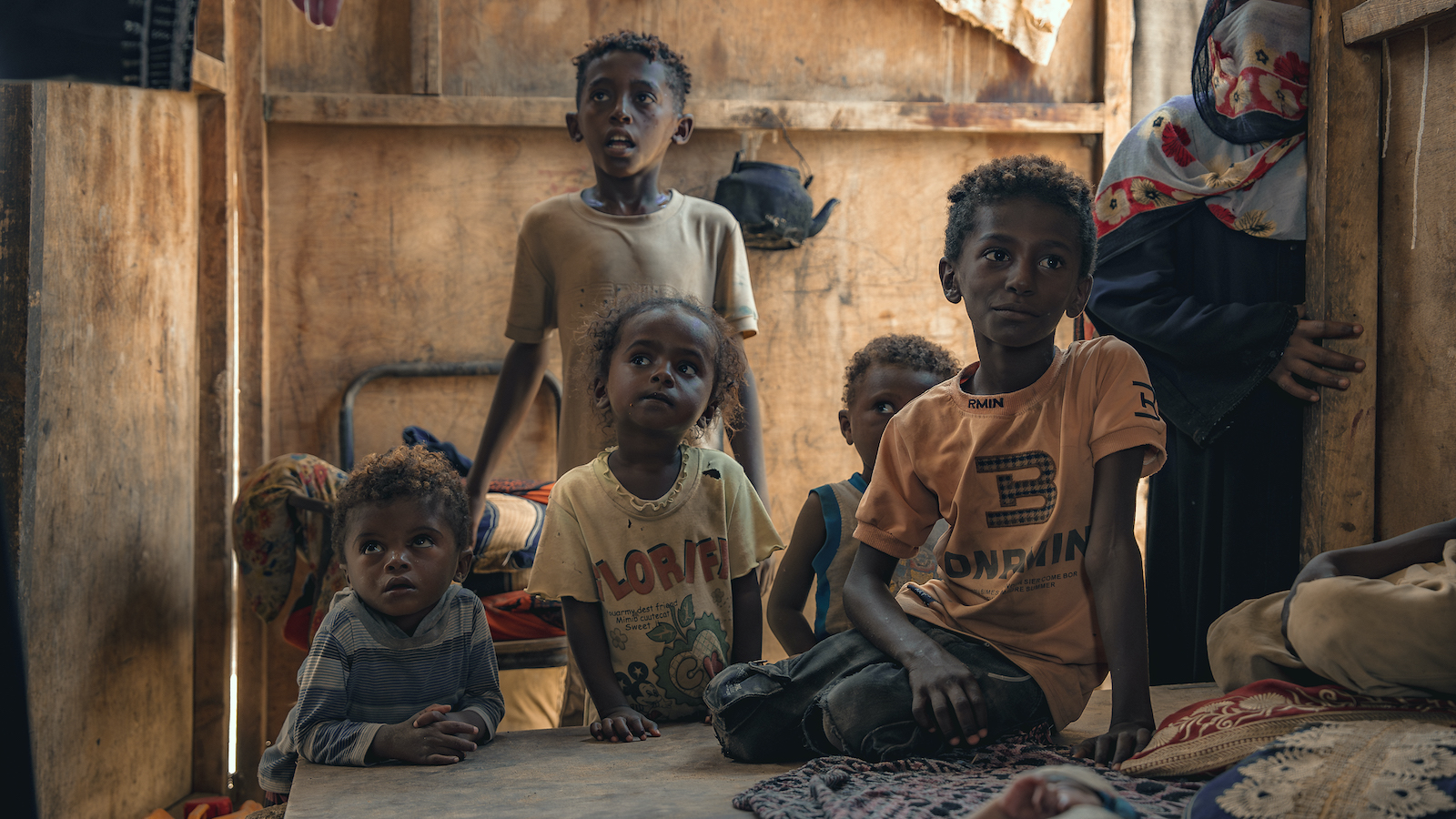
Yemen is a predominantly young country, with roughly 40% of its population under the age of 15. That means a large portion of the population have been born into the crisis. During these critical years of growth, children face higher risks than adults to their health, nutrition, and overall development.
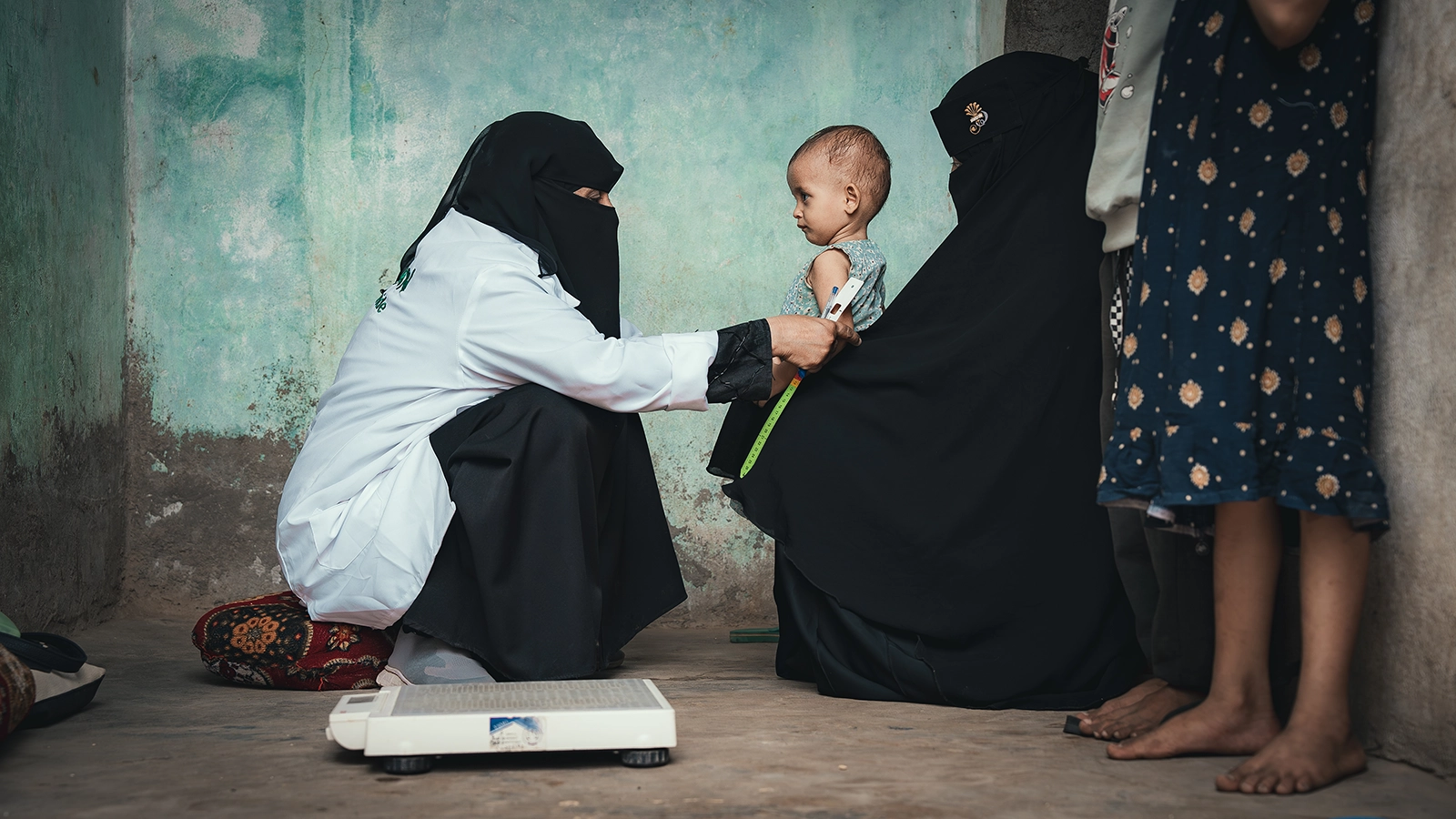
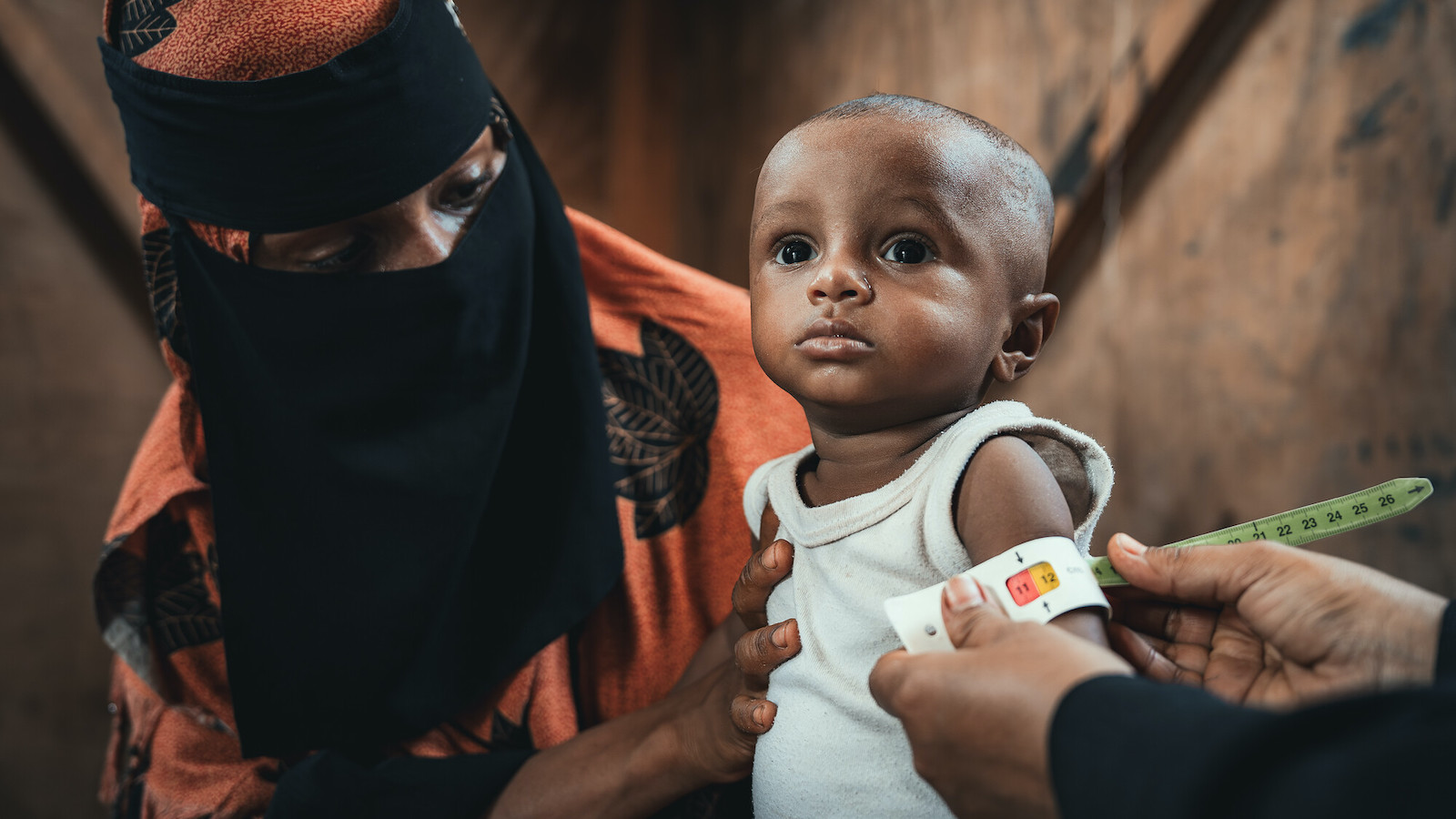
The risks are higher for the youngest Yemenis: 2.5 million children under the age of 5 are acutely malnourished, and nearly twice as many are stunted (a condition caused by chronic malnutrition). These can create a lifetime of consequences during a crisis. According to last year’s Global Hunger Index, 3.9% of children in Yemen die before their fifth birthday. Even more lives are at stake in the wake of funding cuts: Over 3,000 nutrition sites in Yemen have closed, and vital supplies are growing increasingly limited.
5. Yemen is one of the largest internal displacement crises today
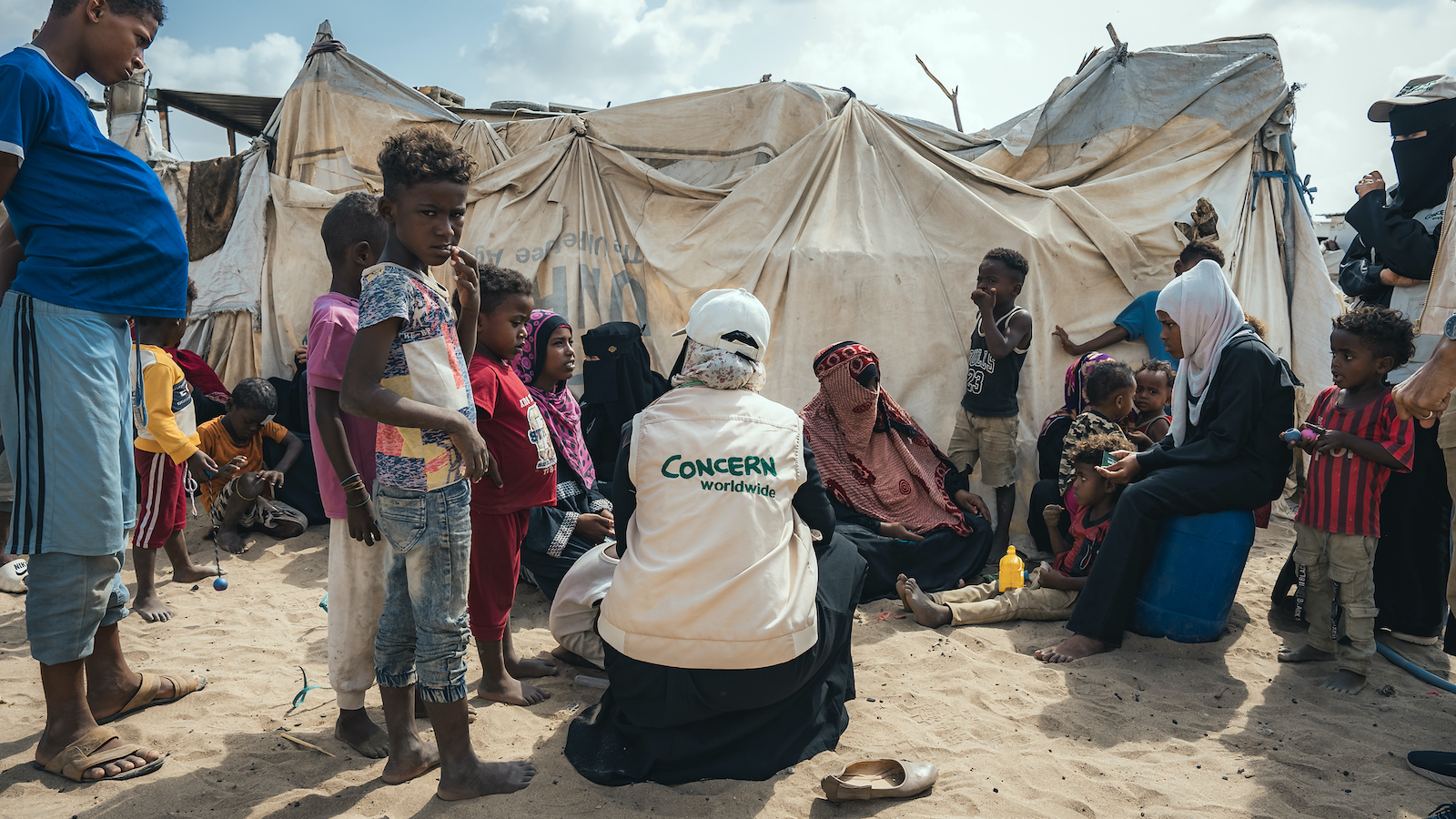
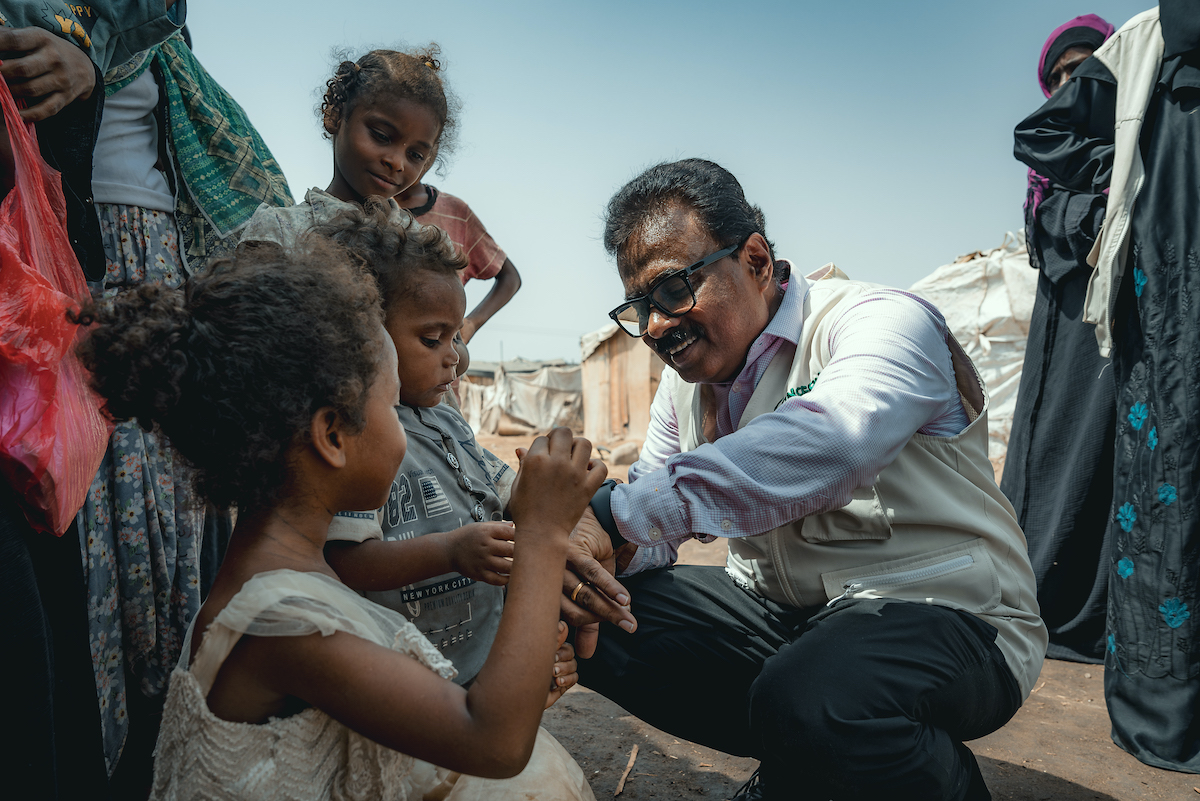
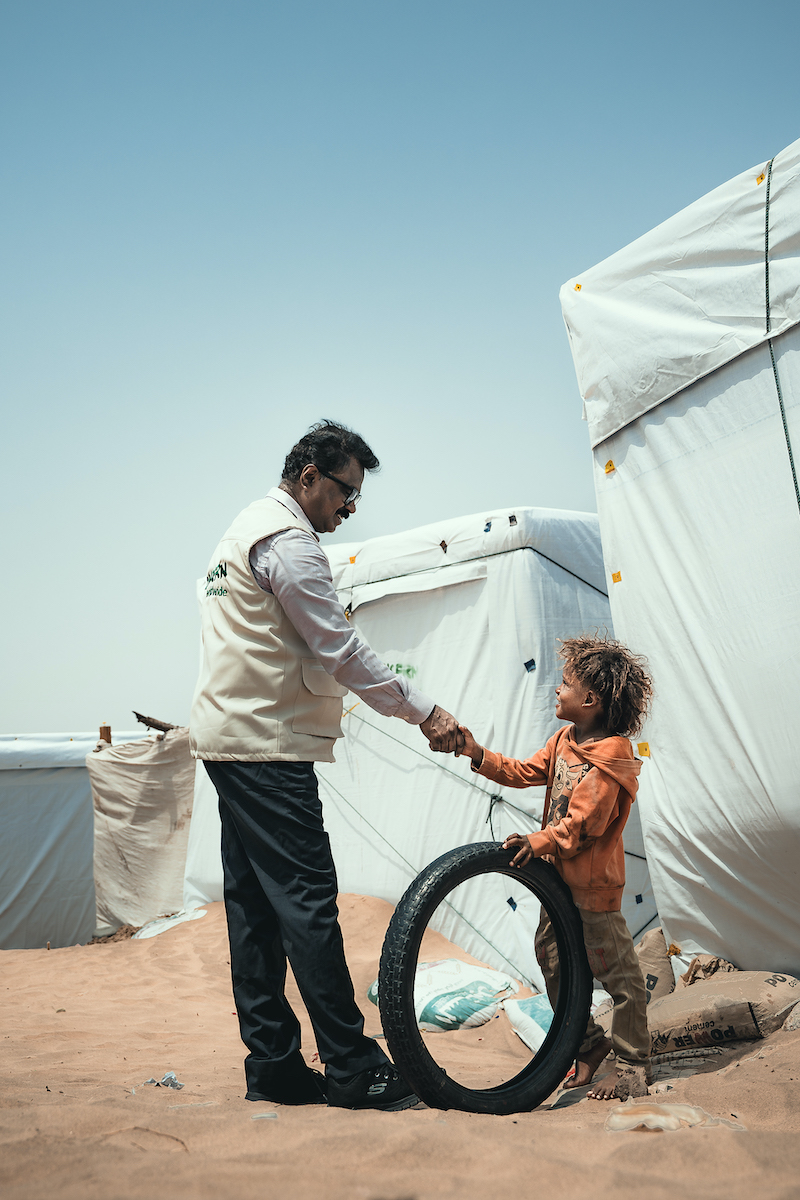
Over a decade of crisis has uprooted the lives of millions of Yemenis. Since 2014, the population of internally-displaced people in Yemen has increased by more than tenfold, with over 4.5 million people forced to flee their homes. Roughly 80% of all IDPs in Yemen are women and children, and 1.6 million live in informal displacement sites.
Living conditions in IDP camps present their own challenges, including access to clean water, functioning health facilities, and environmental risks like sandstorms. As of 2025, 40% of IDP sites were also at high risk for fire and/or flooding. Even for internally-displaced Yemenis living outside of these sites, accessing adequate sanitation remains a challenge — and over 300,000 people were at high risk of eviction due to unaffordable rent.
Concern in Yemen
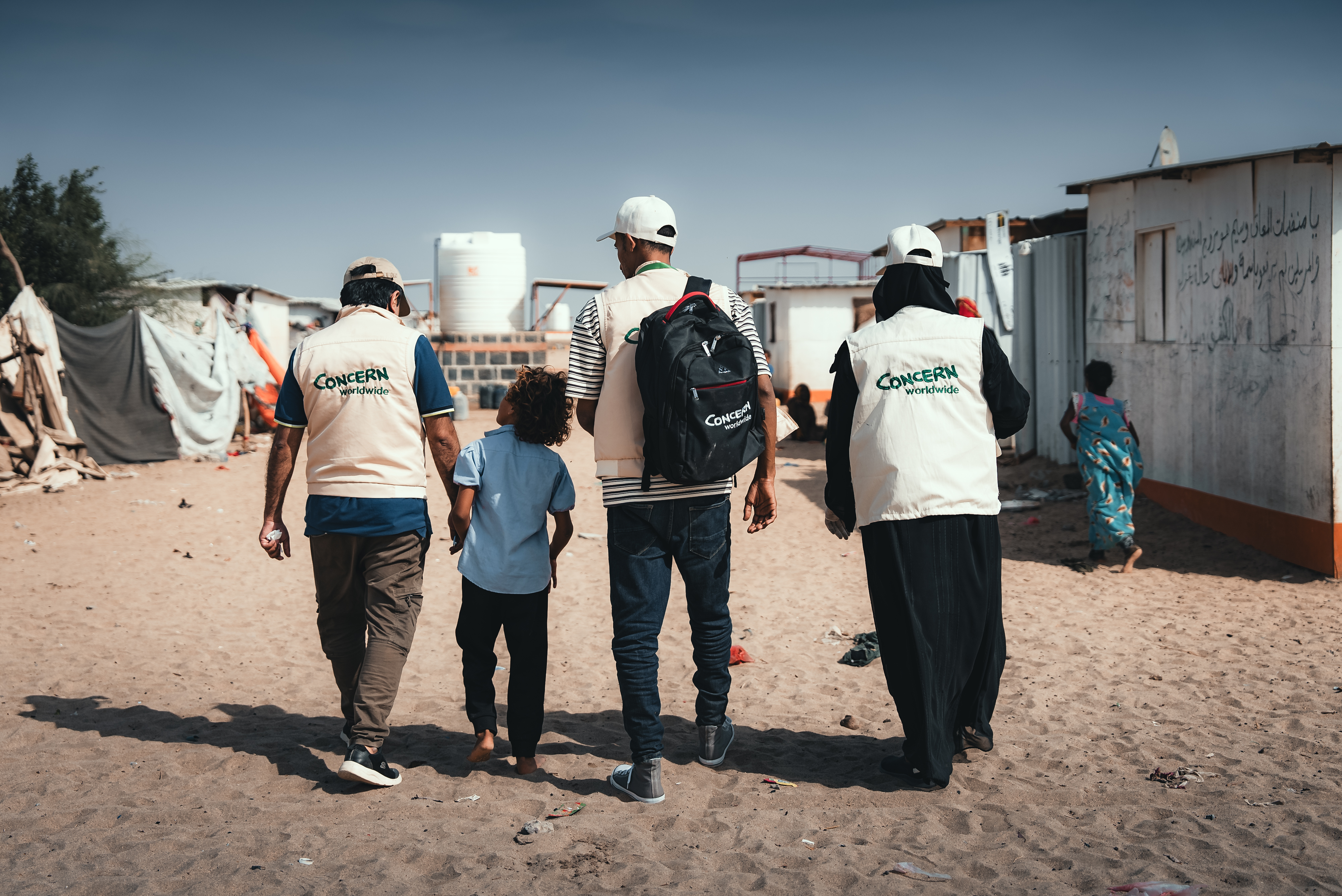
Concern has been working in Yemen since 2024, responding to urgent humanitarian needs and supporting families in some of the country’s most vulnerable areas. In just two years, we’ve built strong relationships with communities, local leaders, UN agencies, and other humanitarian organizations, laying the foundation for programs that make a real difference.
Our work focuses on two of the most critical areas: water, sanitation, and hygiene (WASH), and health and nutrition. In 2025, we provided primary healthcare at six facilities across Tuban, Al Milah, and Waziyah districts, treating illnesses, supporting child nutrition, running immunization programs, and helping manage common childhood diseases. We’ve also worked to train and support Community Health Volunteers — a key link between families and healthcare services.
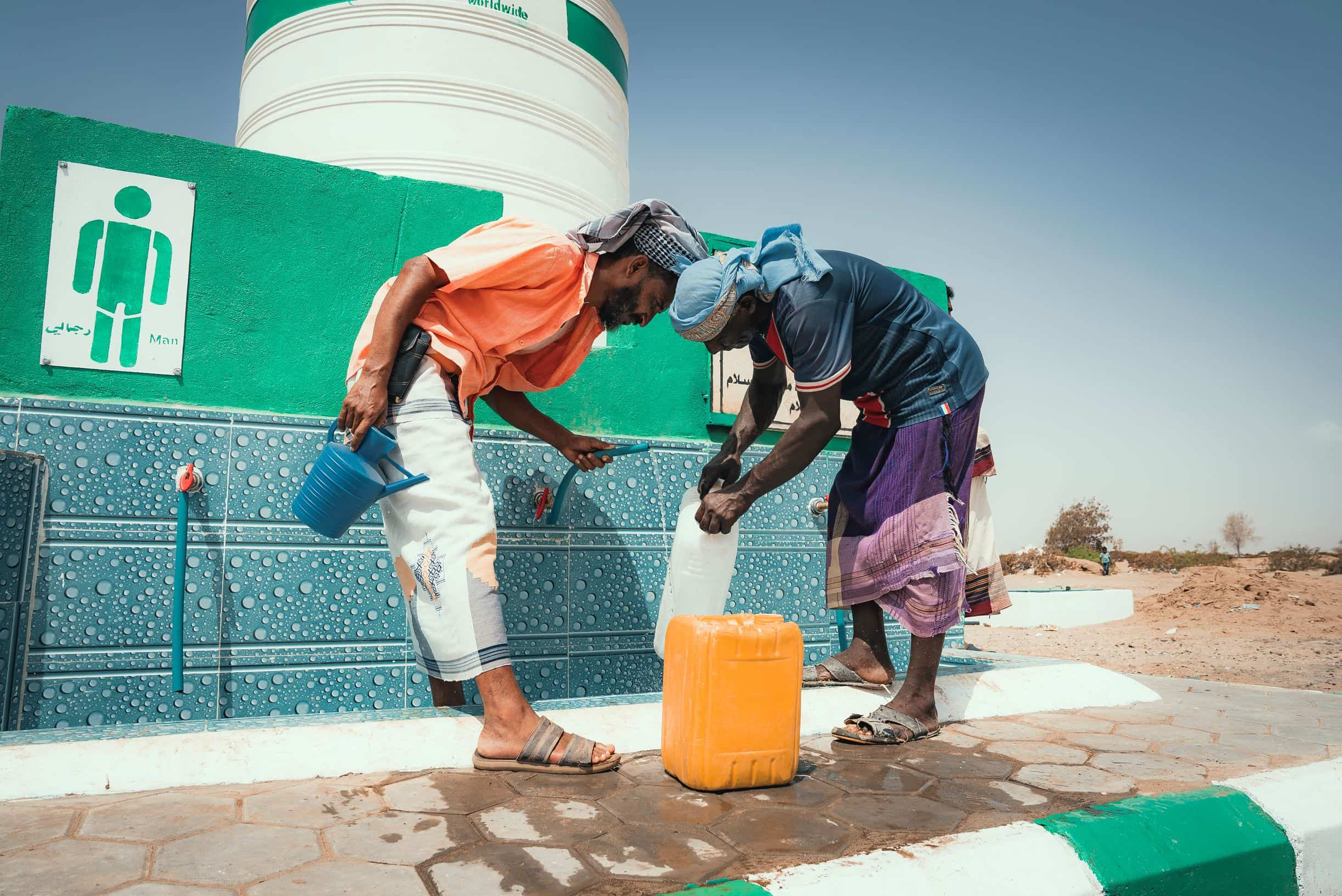
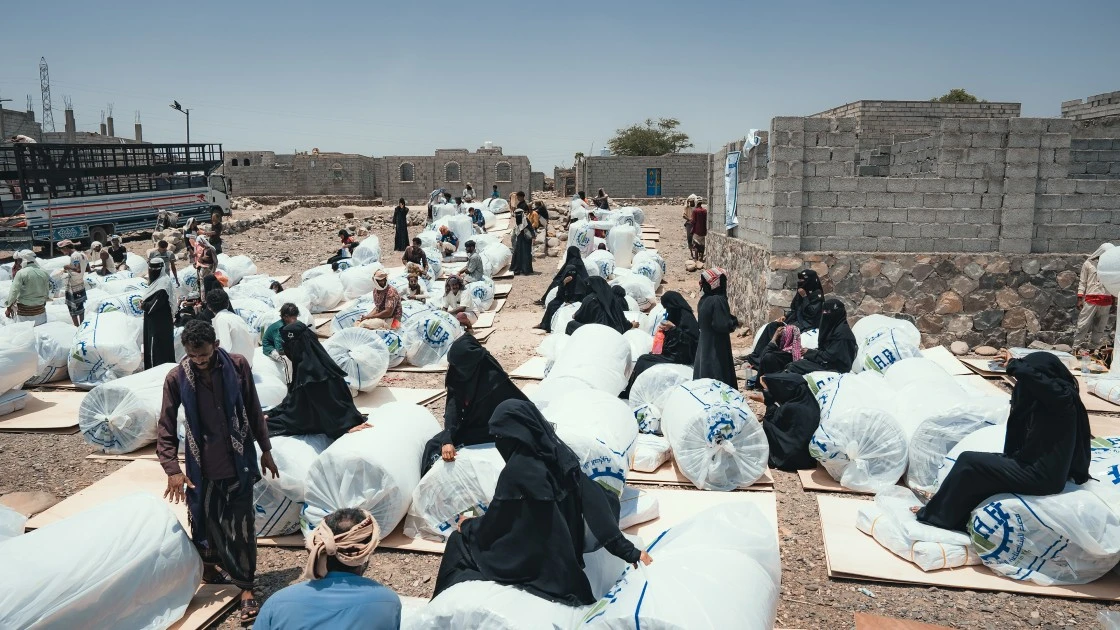
In WASH, we’ve repaired water points, built emergency latrines, and delivered hygiene essentials in IDP sites. We’ve also responded to natural disasters, distributing shelter materials and other essentials to IDPs following sandstorms and providing lifesaving support to communities affected by the 2025 tidal surge and floods.